
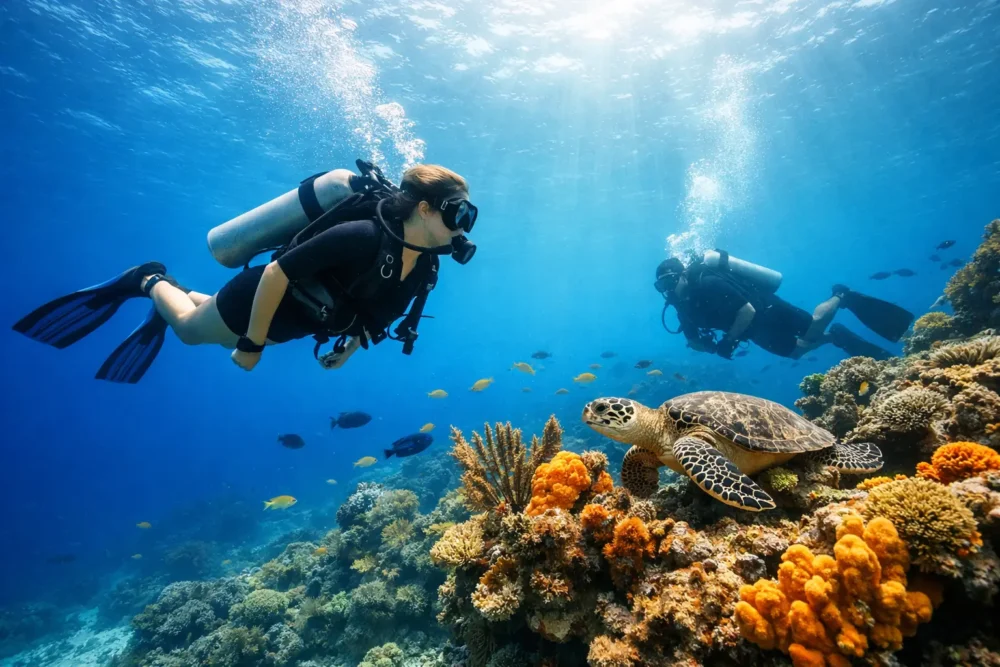
The best scuba diving in Cozumel is not about ticking off the most famous reef name on a crowded boat. It is that moment when the current carries you effortlessly along a wall, a turtle cruises beneath you, and there is enough room to pause, look around, and take it all in. Cozumel rewards divers who choose the right day, the right reef, and the right crew.
This is one of the Caribbean’s great dive destinations for a reason. Warm water, excellent visibility, healthy coral structures, and gentle-to-lively drift conditions create diving that feels different from one site to the next. Whether you are getting certified, returning after a break, or chasing deeper walls and longer bottom times, Cozumel has a reef with your name on it.
Why Cozumel Diving Feels So Different
Most of Cozumel’s signature diving happens along the island’s protected west coast, where the Mesoamerican Reef meets clear Caribbean water. Visibility often reaches well beyond 80 feet and can be even better on the right day. Sunlight pours through swim-throughs, illuminates coral heads, and makes the reef colors pop in a way photos rarely capture.
Then there is the drift. Current is part of the experience here, not something to fight. On many dives, you enter together, settle into your depth, and let the water move you along the reef while the boat follows your group from the surface. It can feel wonderfully relaxed, but it also calls for good buoyancy, awareness, and an operator that plans conservatively for conditions.
Cozumel is not one-note diving. A calm shallow reef can be ideal for a first-time diver in the morning, while a deeper wall with a stronger current may be the right afternoon plan for experienced guests. That range is exactly what makes the island so compelling for mixed groups and multi-day dive vacations.
Best Scuba Diving in Cozumel: Reefs Worth Your Time
There is no single “best” Cozumel reef for every diver. The best site depends on your certification, comfort in current, recent experience, weather, and what the sea is doing that day. A good dive team does not force the itinerary. They use local knowledge to put you where conditions and experience level line up.
Palancar: Big Reef Scenery and Famous Swim-Throughs
Palancar is the name many divers know before arriving, and it earns the attention. This reef system offers massive coral formations, arches, tunnels, sandy channels, and dramatic changes in depth. Palancar Gardens is often a welcoming introduction to the area, while deeper sections such as Palancar Bricks or Palancar Caves can deliver more structure and a stronger sense of scale.
The trade-off is popularity. On a busy day, timing matters. An early departure and a fast boat can make the difference between having a reef scene nearly to yourself and following a parade of bubbles. Palancar is best appreciated slowly, with excellent buoyancy and a guide who knows when to stop rather than rush from feature to feature.
Santa Rosa Wall: A Classic Cozumel Drift Dive
Santa Rosa Wall is where many certified divers fall in love with Cozumel. The reef slopes toward deeper blue water, with large sponges, overhangs, canyons, and sandy ledges that invite you to scan for nurse sharks, turtles, eagle rays, and the occasional larger visitor passing in the distance.
This is a site for divers who are comfortable managing their position in current and keeping a close eye on depth and no-decompression limits. The current is often manageable, but it is never a promise. Some days it is a gentle glide; other days it asks more of you. That is why an honest pre-dive briefing and a guide who adjusts the plan matter more than chasing a specific site name.
Colombia: Space, Color, and a Wild Feel
Further south, Colombia Reef often feels more remote and less pressured than the sites closer to town. Colombia Shallows can be a joy for newer divers and photographers, with bright coral, abundant fish life, and plenty of time to refine buoyancy. Colombia Deep adds larger formations, drop-offs, and more of that open-ocean feeling advanced divers come for.
Because southern reefs require more travel time, they are especially rewarding on a full day of diving or when the conditions favor a southern itinerary. The extra ride is not simply transportation. It is an opportunity to reach reefs that feel wonderfully far from the crowd.
Punta Sur and the Southern Reefs: For the Right Conditions
Punta Sur is legendary, but it is not a checkbox dive. It can bring strong currents, deeper profiles, and dramatic terrain, including the famous Devil’s Throat passage for suitably trained, experienced divers. This is the kind of site that deserves respect, not bravado.
If your group’s experience and the day’s sea conditions are right, Punta Sur can be unforgettable. If they are not, choosing another reef is the smart call. The best diving vacation is built around great decisions underwater, not a rigid wish list made before you saw the ocean.
The Boat Experience Changes the Dive
A beautiful reef can lose its magic when the boat is overloaded, the briefing is rushed, or divers are divided into groups too large for meaningful guidance. Small groups change the entire rhythm of the day. Your guide can pay attention to air consumption, comfort in the current, camera needs, and what you actually want from the dive.
Look for a licensed operation with experienced local professionals, well-maintained equipment, clear safety procedures, and boat crews that take care of the small details. A proper surface interval, fresh drinking water, assistance with gear, and a crew that knows your name are not extras. They let you save your energy and attention for the reef.
Blue Magic Scuba keeps boat groups deliberately small, typically six to eight divers, with fast boats and personal valet-style equipment support. That means more room, quicker access to less-visited sites, and a far more personal alternative to the cattle-cart dive day.
Great Cozumel Diving for Beginners and Returning Divers
You do not need to be an advanced diver to enjoy Cozumel. Shallow, protected reef areas offer clear water and colorful marine life without requiring a deep profile or challenging route. For nervous first-time divers, a patient Discover Scuba experience can be a comfortable introduction, starting with the skills and confidence needed before heading out to the reef.
If you want to get certified while on vacation, Cozumel is an excellent classroom. Warm water and real reef dives make the Open Water course feel like an adventure rather than time spent checking boxes in a pool. The right instructor will keep standards high while moving at a pace that makes sense for you.
Returning after a long break? Say so when you book. A thoughtful refresher, an easy first dive, and a guide who checks in without making you feel self-conscious can turn hesitation into a great week underwater.
More to Do for Experienced Divers
Cozumel gives seasoned divers plenty of reasons to stay longer. Drift diving is a specialty in its own right, especially when you learn to read the current, control buoyancy near reef structure, and maintain awareness without working too hard. Nitrox can also make sense for divers planning multiple days with repetitive profiles, provided you have the appropriate certification and a plan built around your computer and limits.
Deep, drift, sidemount, Rescue, Divemaster, and instructor-level training can add a meaningful purpose to a dive vacation. For aspiring professionals, the strongest programs go beyond classroom sessions. They include real exposure to daily operations, guest care, boat procedures, briefings, and the decisions that make a dive day safe and memorable.
When to Plan Your Cozumel Dive Trip
Cozumel offers year-round diving, so the best timing depends on your priorities. Winter often brings comfortable air temperatures and popular travel weeks. Spring can offer excellent water clarity and warm, pleasant conditions. Summer means warmer water and fewer layers, while fall may bring quieter travel periods but also requires close attention to tropical weather forecasts.
Water conditions vary from day to day in every season. Do not judge your entire trip by one forecast screenshot. Local teams assess wind, current, visibility, and port conditions each morning, then select the best available plan. Building in three or four dive days rather than only one gives you more flexibility and a much better chance to experience the range of reefs that makes Cozumel special.
Bring a well-fitting mask, listen closely to the briefing, and leave room in your schedule for one more day underwater than you originally planned. The reef has a way of making that extra dive feel like the best decision of the trip.