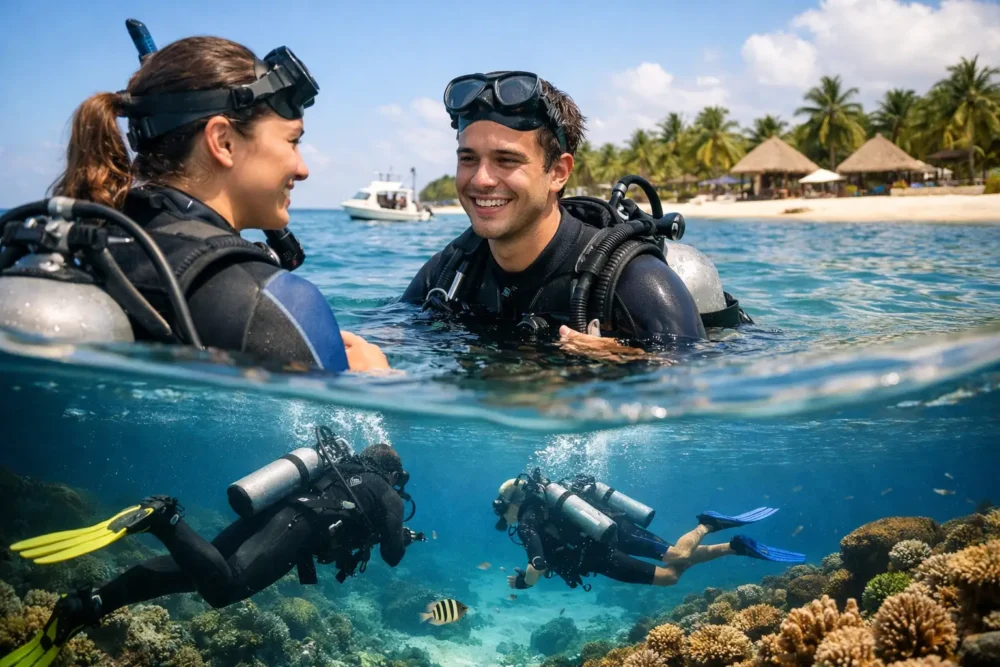
The first time you breathe underwater should not feel rushed, crowded, or confusing. A PADI Open Water course Cozumel experience gives you the chance to learn in warm Caribbean water, then put those new skills to work on reefs people travel across the country to see. It is a certification course, yes, but it can also be the best part of your vacation when the schedule, instructor, and boat experience are built around real beginners.
Cozumel is known for clear water, colorful coral walls, and gentle drift diving. Those conditions make the island a strong place to learn, provided your training is led by professionals who match every session to your comfort level and the day’s conditions. The goal is not to rush you toward a card. The goal is to help you become a calm, capable diver who wants to get back in the water.
Why Take Your Open Water Course in Cozumel?
Learning at home has one obvious advantage: you can spread the course across several weekends. But for many travelers, local quarry or pool training cannot compare with completing certification in clear, warm ocean water. In Cozumel, you can see your surroundings, practice buoyancy with an actual reef beneath you, and finish the course already immersed in the kind of diving you came for.
Visibility is often excellent, water temperatures are comfortable for much of the year, and the island’s protected western coastline offers a remarkable variety of dive sites. You may encounter schools of blue tang, parrotfish, barracuda, rays, turtles, and coral formations that make every descent feel like an adventure rather than another lap around a training platform.
There is a trade-off. Ocean training has changing conditions, including current, wind, and occasional weather delays. That is why a quality operation does not force a fixed plan onto every student. Your instructor should choose appropriate sites, explain what to expect before each dive, and adjust the pace when needed. Confidence grows faster when you feel informed and supported.
What the PADI Open Water Course Includes
The PADI Open Water Diver certification is the foundation for recreational scuba diving around the world. Once certified, you can dive with a buddy within the limits of your training, rent equipment, and join guided boat dives on future trips.
The course combines three parts: knowledge development, confined-water skill practice, and four open-water training dives. Knowledge development covers the practical subjects that keep diving enjoyable and safe, including pressure changes, equipment basics, buoyancy, dive planning, underwater communication, and responsible diving practices.
Confined-water sessions are where you learn and repeat essential skills in a controlled setting. You will practice clearing water from your mask, recovering a regulator, sharing air, controlling your ascent, and responding calmly to common situations. Nobody is expected to perform perfectly on the first attempt. Good instruction means clear demonstrations, patient coaching, and time to repeat a skill until it feels natural.
Your open-water dives are where everything comes together. You will apply those skills in the ocean, work on buoyancy and awareness, and experience the simple thrill of moving through a reef as a diver instead of watching it from the surface.
Online Study or a Vacation-Based Schedule
Many students complete the academic portion before arriving through PADI eLearning. This can make the Cozumel portion of the trip more focused on practical instruction and ocean time. It is a smart choice if you want to protect vacation days for diving, beach time, and exploring the island.
A fully vacation-based schedule can work well too, especially if you prefer to ask questions face-to-face as you learn. The right option depends on your travel dates, how quickly you absorb new material, and whether you want a more relaxed pace. Do not plan your course around the shortest possible timeline alone. Leave room for rest, weather flexibility, and the fact that new skills sometimes need an extra try.
Small Groups Make a Big Difference for Beginners
A beginner course is personal by nature. You are learning to manage new equipment, new sensations, and a completely new environment. It is much easier to ask questions when you are not competing for an instructor’s attention in a large group.
At Blue Magic Scuba, the focus is on personal service from the first questions about scheduling through your final certification dives. Small boat groups, typically six to eight divers, mean less waiting, more room to get comfortable, and a more relaxed day on the water. Fast, uncrowded boats also help make the transition between learning sessions feel like part of a real Caribbean diving vacation, not a production line.
That smaller setting matters most for nervous students. Feeling a little anxious before your first descent is normal. A patient instructor can slow the process down, review a skill on the surface, and let you move forward at a pace that builds trust. You should never feel embarrassed for needing clarification or another attempt.
Is Cozumel Right for a First-Time Diver?
For most healthy, comfortable swimmers, Cozumel is an outstanding place to get certified. You do not need to be an elite athlete, but you should be able to swim, float or tread water, and feel reasonably at ease in the water. Before starting, you will complete required PADI paperwork and a medical questionnaire. Certain medical conditions, medications, or recent health issues may require a physician’s approval, so it is best to review that early rather than after you arrive.
Cozumel is especially appealing if you want your first dives to feel memorable. Warm water reduces the distraction of being cold. Clear conditions make it easier to see your instructor and understand what is happening around you. And when you are properly weighted and begin to hover, the reef gives you a natural reason to focus on buoyancy rather than just the checklist.
The island may not be the best fit if you only have one tightly scheduled day, dislike being in open water, or are unable to commit to the preparation and skills practice. In that case, a Discover Scuba experience can be a better first step. It lets you try scuba with direct supervision before deciding whether a full certification course is right for you.
How to Plan a Better Course Vacation
Build your trip with breathing room. Arrive before your course begins if possible, especially after a long travel day. You will be more comfortable in the water when you are rested, hydrated, and not watching the clock.
Also plan your flying schedule carefully. Divers need a surface interval before flying after scuba diving, and your instructor will explain the appropriate guidance for your course schedule. A final no-dive day is not wasted vacation time in Cozumel. Use it for a beach afternoon, a relaxed meal in town, or simply time to enjoy the island above the water.
Accommodation can shape the whole experience as well. Staying close to the dive operation simplifies early starts and gear logistics. Blue Magic Suites and flexible dive-and-stay options can be especially useful for travelers who want a straightforward setup rather than coordinating every detail separately. Ask about available lodging nights and package options when you check course dates.
What to Bring and What to Expect on the Boat
Bring a swimsuit, reef-safe sun protection, a towel, drinking water, and any personal items you prefer for comfort. Your dive team can help with the technical equipment and fitting process, but be honest about anything that feels too tight, too loose, or unfamiliar. Properly fitted gear is part of learning to dive comfortably.
On the boat, expect a thorough briefing before entering the water. You should know the plan, the site conditions, the hand signals you will use, and what your instructor wants you to practice. Between dives, take the time to ask questions. The crew’s job is not just to get you to the reef. It is to help you arrive there prepared.
Your first open-water dive may feel intense for the first few minutes. Then, for many students, something shifts. Breathing settles, the reef comes into focus, and the skills stop feeling like a test. Give yourself permission to learn slowly enough to notice that moment.