
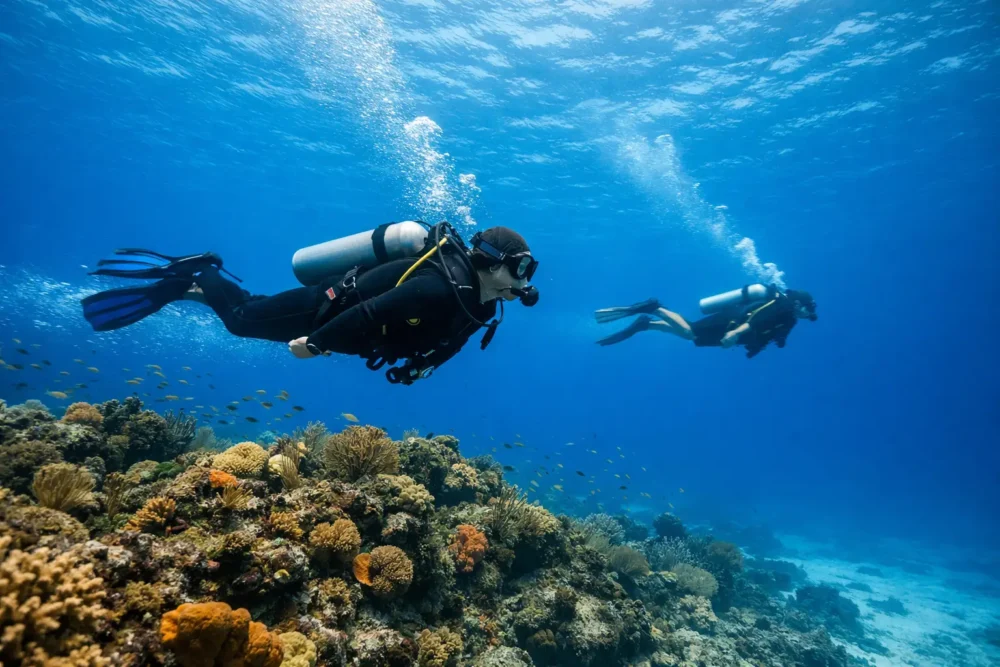
A Cozumel drift dive often starts with the boat slowing over a brilliant blue drop-off, divers stepping in one at a time, and the reef beginning to move beneath them before the bubbles have settled. That is the appeal of Cozumel drift diving: instead of fighting to get somewhere, you let the current carry you along a living Caribbean wall, over coral gardens, through sandy channels, and past schools of fish that seem perfectly at home in the flow.
For many certified divers, this is the reason Cozumel becomes a repeat destination. The water is warm, the visibility can be remarkable, and the island’s western reefs offer long, relaxed underwater rides. But drift diving is not simply “jump in and float.” A great experience depends on choosing the right site for the day, understanding the conditions, and diving with a crew that knows when a gentle current is fun and when it calls for a more conservative plan.
What Makes Cozumel Drift Diving Different
Cozumel sits beside the Mesoamerican Reef, with much of the famous reef system protected within a marine park. The reefs along the island’s leeward side are shaped for memorable drift dives: sloping coral heads, dramatic walls, swim-throughs, pinnacles, and wide sandy areas that make it easy to stay oriented while the water moves around you.
The current usually travels north to south, though its strength and direction vary with weather, tides, and local conditions. On a mellow day, it can feel like flying over the reef with almost no effort. On a stronger day, it may move you quickly past coral formations and require tighter buddy awareness, more frequent checks of depth and position, and clean buoyancy control.
That variation is exactly why local knowledge matters. A capable crew does not force every group onto the same site just because it is on the schedule. They match the day’s conditions with diver experience, air consumption, comfort level, and the kind of underwater experience the group wants. Some guests want a calm, colorful reef cruise. Others are ready for a deeper wall or a more energetic ride. Both can be excellent Cozumel diving, but they are not the same dive.
How a Drift Dive Works in Cozumel
Unlike a dive that begins and ends at a fixed mooring line, a drift dive has a moving plan. Your boat drops the group at the chosen entry point, then follows the divers from the surface. Once underwater, you descend together, settle into the current, and travel with the reef rather than against it. At the end of the dive, everyone ascends and the boat picks the group up where they surface.
That sounds simple because, in the right hands, it is. The work happens before you enter the water. Your guide should explain the planned route, expected current, maximum depth, time limits, ascent procedure, surface signaling, and what to do if you become separated from the group. You should know who carries the surface marker buoy, how the boat team tracks divers, and where to meet if the group gets spread out.
Small groups make a noticeable difference here. With six to eight divers rather than a packed boat, there is more room to gear up, more attention during the briefing, and a better chance that the guide can adjust the pace to the divers in the water. It also makes pickup calmer and more organized, especially when surface conditions are choppy.
Who Can Enjoy a Cozumel Drift Dive?
Drift diving is not reserved for advanced divers. A newly certified diver can often enjoy an easy Cozumel drift dive with the right briefing, an appropriate shallow site, and a patient guide. In fact, many people find a light current less tiring than kicking across a reef on their own. The key is being honest about your comfort level before the boat leaves the dock.
If you are newer to diving, focus on three skills: staying close to your buddy, maintaining neutral buoyancy, and ascending only with the group when the guide signals. You do not need to be perfect. You do need to be comfortable clearing your mask, controlling your descent, and following a simple plan without panic. If you have not dived in a while, a refresher before your first boat day is a smart way to start.
Experienced divers often appreciate Cozumel for different reasons. The current lets them cover more terrain, while the reef topography keeps every dive visually interesting. Advanced routes can include deeper sections, walls, caverns, and faster water, depending on conditions and training. Divers pursuing a Drift, Deep, Nitrox, or Sidemount specialty can also turn a great vacation into meaningful skill development.
The Skills That Make Drift Diving Better
Good buoyancy is the foundation of a relaxed drift dive. When you are properly weighted and trimmed, you can hold your depth without constantly kicking or using your hands. That protects the reef and frees you to look for turtles, eagle rays, nurse sharks, spotted drums, lobsters, and the tiny creatures tucked into coral ledges.
Awareness matters just as much. Check your buddy frequently, not only when something feels wrong. In a current, a few seconds of distraction can create more distance than expected. Stay within the guide’s visual range, watch your pressure gauge regularly, and avoid dropping lower or wandering farther into the blue just to chase a photo.
A delayed surface marker buoy is a valuable tool, particularly for safety stops and ascents in open water. If you are not comfortable deploying one, tell the crew. Your guide may handle it, or you may have the chance to practice under supervision. Stronger divers should not confuse independence with ignoring the plan. A disciplined team is what makes a drift dive feel easy.
Reef Routes Worth Asking About
Cozumel’s best-known reefs each have their own personality. Palancar is famous for grand coral structures, blue-water views, and routes that can suit a range of experience levels. Colombia often delivers broad reef scenery, healthy coral, and the feeling of moving through a huge underwater landscape. Santa Rosa Wall is a favorite for dramatic drop-offs and big reef formations, while Paso del Cedral can bring lively conditions, marine life, and a little more energy.
The “best” site depends on the day. A name on a wish list is useful, but it should not outweigh current, weather, group certification level, or the marine park’s operational rules. A less famous reef with clear water, a comfortable current, and an uncrowded route can easily become the dive you remember most.
Fast boats help create better choices. Reaching southern reefs efficiently can mean more time where the reef is healthiest and less time commuting. It can also make it easier for the crew to adjust the plan when wind, current, or boat traffic changes the picture.
What to Bring and What to Expect
Bring your certification card or digital proof, logbook if you keep one, swimsuit, reef-safe sun protection for before and after the dive, and any personal gear that helps you feel comfortable. A properly fitting mask is worth bringing if you own one. Your dive operator can typically provide the core equipment, but ask about what is included and whether gear is set up and carried for you.
Expect a professional briefing, a check of your experience and equipment, and clear communication before every entry. Licensed boats, experienced professionals, oxygen and emergency equipment, and sensible limits are not extras. They are the baseline for responsible Caribbean diving.
At Blue Magic Scuba, the goal is to make the boat day personal without making it complicated. Small groups, attentive equipment support, and guides who know the local reefs allow divers to focus on the reason they came: enjoying Cozumel scuba diving at its best. If you are planning a course, a first dive, or a full week of reef time, asking about current conditions and availability through WhatsApp before arrival can help shape the right itinerary.
The current will never be exactly the same twice. That is part of the magic. Arrive ready to listen to the briefing, stay close to your team, and let the reef set the pace. The best Cozumel drift dives are not about covering the most distance – they are about having enough confidence and time to notice everything passing by.