
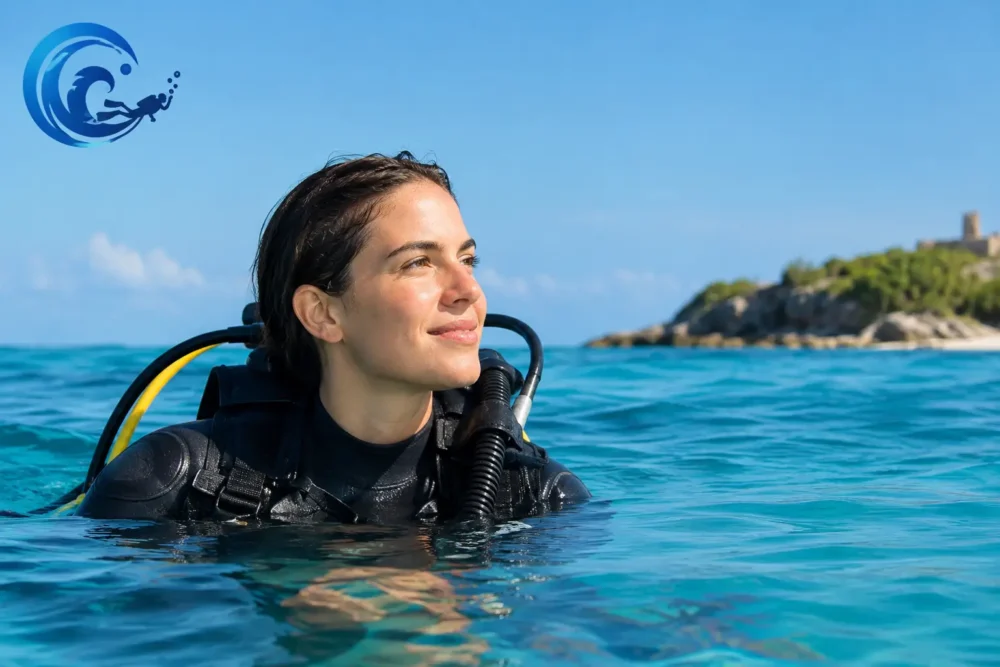
The moment before a descent can feel louder than the boat engine. Your mask suddenly seems too tight, your breathing feels fast, and the blue water below looks much bigger than it did from the dock. That reaction is more common than many divers admit. Effective dive anxiety management is not about pretending you are fearless. It is about recognizing what your body is telling you, using the right skills early, and diving with people who give you time to settle in.
Cozumel is an outstanding place to rebuild confidence because warm water, clear visibility, and gentle-to-lively drift conditions can make the underwater world feel inviting. Still, a beautiful reef does not erase nerves by itself. The plan, the briefing, your equipment, and the people around you make the real difference.
Why Dive Anxiety Happens
Anxiety is your brain trying to protect you from uncertainty. For a new diver, that uncertainty may be breathing underwater for the first time or remembering a skill sequence. For a certified diver, it may show up after a long surface interval from diving, a difficult past experience, a challenging current, or pressure to keep pace with friends.
Physical sensations can also start a cycle. You notice your breathing speed up, interpret it as a problem, then breathe even faster. You may feel rushed while gearing up, worry about equalizing, or become overly focused on a small discomfort such as a drop of water in your mask. None of this means you are a bad diver. It means the conditions, expectations, or pace need adjustment.
The goal is not to push through every feeling. Sometimes nerves fade once you slow down. Other times, the smart decision is to remain on the boat, return to shore, or choose a simpler dive. Good judgment is part of becoming a confident diver.
Dive Anxiety Management Starts Before the Boat Leaves
The best time to address anxiety is before you are standing at the edge of the boat. Tell the dive shop what you need when booking, especially if you are a first-time diver, have not been diving recently, or had a previous incident that still affects you. Clear information allows the team to recommend the right experience rather than treating every guest as if they have identical comfort levels.
On dive day, arrive with enough time to avoid a rushed start. Drink water, eat a light meal that agrees with you, and avoid drinking alcohol the night before. These basics cannot eliminate anxiety, but dehydration, fatigue, hunger, and a pounding hangover can make normal pre-dive nerves feel far more intense.
Check your own equipment slowly. Confirm that your mask is comfortable, your fins fit, your weight system makes sense, and you know where your alternate air source and inflator are located. If you are renting gear, ask for changes before the boat departs. A mask that leaks because it does not fit, or fins that pinch your feet, can distract you from enjoying an otherwise easy dive.
A refresher is often the right choice after time away from the water. There is no prize for skipping a review when you would feel better practicing regulator recovery, mask clearing, buoyancy, and hand signals in a controlled setting. Strong divers return to basics all the time.
Choose the Right Dive, Not the Most Impressive One
Cozumel offers extraordinary walls, deep sites, and exhilarating drift diving, but your first dive back does not need to be the most ambitious one on the schedule. A shallow reef with mild current, excellent visibility, and a relaxed entry can be exactly what restores your comfort.
Be honest about your experience rather than trying to match another diver’s profile. A great guide can tailor the pace, but only if they know what is going on. Ask about the expected depth, current, entry style, surface conditions, and group size. If a plan feels beyond your comfort zone that morning, say so.
Small groups help here. It is easier to ask a question, repeat a skill, or pause at the surface when you are not trying to keep up with a crowded boat full of strangers. Blue Magic Scuba keeps boat groups deliberately small, giving divers more personal attention from crew and guides without making the experience feel dramatic or clinical.
Use a Simple Reset at the Surface
Many anxious moments can be handled before you descend. Once you are in the water, establish positive buoyancy, hold the line or boat if appropriate, and take several slow breaths. Do not force yourself underwater because everyone else has started down.
Try a simple breathing pattern: inhale gently, then make your exhale longer and unhurried. You are not trying to take giant breaths. You are giving your nervous system a signal that there is no emergency. Look around, make eye contact with your buddy or guide, and use the okay signal only when you genuinely feel ready.
If you are worried about equalizing, descend very gradually. Equalize before you feel pressure, then continue in small increments. If your ears do not clear, stop and ascend slightly. Never push through pain. A calm, patient descent is safer and more enjoyable than a fast one.
For divers who feel overwhelmed by the open water below, focus on one next action instead of the entire dive. Clear the surface. Check your buddy. Descend a few feet. Equalize. Look at the reef. Anxiety often shrinks when the task becomes immediate and manageable.
What to Do If Anxiety Arrives Underwater
Anxiety can appear even after a calm entry. Maybe current feels stronger than expected, your mask fogs, or you suddenly become very aware of your breathing. The response should be simple: stop, breathe, think, and act.
Stop moving forward if it is safe to do so. Maintain position near the reef without touching it, or use the line if the dive plan includes one. Take slow breaths and look at your buddy or guide. Signal that something is wrong. A good buddy team does not require you to solve every problem alone.
Then identify the actual issue. Is your mask leaking? Is your ear uncomfortable? Are you overexerted from swimming against current? Is it simply a wave of fear with no equipment problem? The answer determines the next step. You may clear your mask, adjust your position, rest, or end the dive with your buddy and guide.
Ascending is not failure. If you cannot regain comfort quickly, signal the dive leader and make a controlled ascent according to the plan. A shorter, calm dive is far better than continuing while distressed. The reef will still be there another day.
Build Confidence One Skill at a Time
Confidence is earned through repetitions that feel manageable. If mask anxiety is your issue, practice clearing and removing the mask in calm, shallow water with an instructor. If buoyancy makes you nervous, spend focused time hovering, adjusting weights, and using slow fin kicks rather than chasing depth or distance. If current is the concern, learn how to streamline, stay close to the guide, and let a drift dive work with the water instead of fighting it.
Training can be particularly valuable when anxiety comes from a knowledge gap. A private refresh, Discover Scuba experience, or course session gives you a structured place to ask questions and practice without the pressure of a busy boat schedule. Advanced training also has its place, but it should follow comfort, not replace it. Deep, drift, or sidemount courses are rewarding when you are ready for their added task load.
Keep a brief note after each dive. Record what made you nervous, what helped, and what you enjoyed. Over several dives, you may notice useful patterns: perhaps you are comfortable after a slow descent, better with a familiar buddy, or happiest on morning dives when the sea is calm. That is not being picky. It is learning how you dive best.
How Buddies and Guides Can Help
If you are diving with a nervous friend, avoid dismissive phrases such as “just relax” or “there is nothing to worry about.” Anxiety is rarely solved by being told it is irrational. Ask what would help: more time at the surface, a review of hand signals, a shallower route, or the option to turn the dive early.
Divers managing anxiety should make one clear agreement with their buddy before entering the water: either diver can call the dive for any reason. That agreement removes the fear of disappointing someone. It also strengthens the trust that makes diving feel safer.
The right dive operation will support that mindset with thorough briefings, experienced professionals, properly maintained gear, licensed boats, and a pace that puts safety ahead of a tight schedule. Personal service is not only about comfort. It creates the space for honest communication before a small concern becomes a bigger one.
A calm dive does not have to be a perfect dive. It can be the one where you paused, signaled, took a breath, and discovered that you were capable of making a good decision underwater. Give yourself that time, and let each comfortable moment on the reef become evidence that you belong there.