A professional dive career is not just a longer version of your vacation dives. It means early mornings at the marina, changing conditions, guest questions, gear checks, marine-life moments that still stop you cold, and the responsibility of helping people feel safe in the ocean. When comparing divemaster versus instructor careers, the right choice comes down to the work you want to do every day, not simply the highest certification you can earn.
For many divers, Cozumel is an ideal place to find that answer. The current keeps every dive interesting, the reefs reward repeat visits, and daily boat operations give future professionals real experience instead of endless classroom theory. But Divemaster and Instructor are different jobs with different rewards.
Divemaster Versus Instructor Careers: The Real Difference
A Divemaster is a dive leader. An Instructor is an educator who can certify divers. Both are dive professionals, both carry serious responsibility, and many outstanding instructors began as excellent Divemasters. Still, their day-to-day focus is distinct.
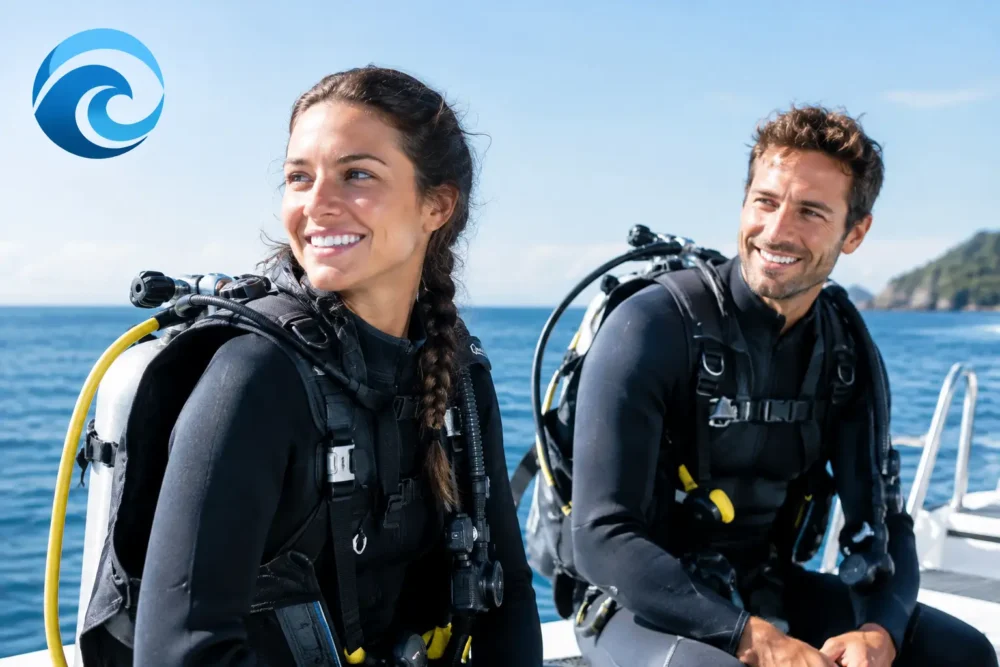
The Divemaster role is built around supervision, logistics, local knowledge, and guest experience. You may greet divers at the dock, help set up equipment, brief the site, lead certified divers through a drift dive, spot a curious turtle before the group passes it, and make sure everyone returns to the boat happy and accounted for. A strong Divemaster reads people well. They notice the diver who is quiet because they are nervous, the guest whose weights need adjusting, and the photographer who needs a little more room around a reef feature.
An Instructor has those leadership skills too, but adds the ability to teach, evaluate, and certify students. They break complex skills into calm, understandable steps. They manage standards, paperwork, confined-water sessions, open-water training dives, and the wide range of emotions that can come with learning to breathe underwater for the first time. The best instructors do more than demonstrate a mask clear. They build a diver’s confidence without ever compromising safety.
Neither path is automatically better. One may simply be a better fit for the way you like to work.
A Divemaster Career Is About Leading Great Dives
If your favorite part of diving is being on the boat, sharing a reef you know well, and helping certified divers have an exceptional day, Divemaster may be the career that fits you best. This role is hands-on, social, and operational. You become part guide, part problem-solver, part safety professional, and often the person who sets the tone for the whole group.
In a destination such as Cozumel, Divemasters need strong drift-diving judgment. Currents can make the island’s walls and coral gardens wonderfully easy to explore, but they also require thoughtful planning, consistent group control, and excellent surface-awareness skills. A Divemaster learns how to guide the dive rather than fight it, while keeping divers together and choosing the right route for the conditions.
Training as a Divemaster also provides an honest look behind the scenes. You learn equipment handling, boat procedures, customer care, emergency readiness, briefings, mapping, and how a dive operation stays organized when multiple groups are heading out. A genuine internship is especially valuable because the learning happens during real daily operations, not only in staged exercises.
The trade-off is that Divemasters cannot independently teach and certify PADI courses. You can assist instructors and gain meaningful teaching exposure, but your primary professional value comes from leading, supporting, and supervising divers. For some people, that is exactly the point. They want more time guiding reefs and less time managing course schedules and student paperwork.
Instructor Careers Put Teaching at the Center
Becoming a scuba instructor makes sense when you feel energized by helping someone progress. Perhaps you remember the instructor who made your first descent feel possible, or you love explaining a skill until it clicks. That motivation matters, because teaching is the center of an instructor career.
Instructors can teach beginner programs, certify Open Water Divers, guide continuing education, and help experienced divers build new capabilities through specialties and professional-level training. Depending on their credentials and experience, they may teach Nitrox, Deep, Drift, Sidemount, Rescue, and other courses that suit the destination and their students’ goals.
The job demands patience and precision. Some students learn quickly and arrive already comfortable in the water. Others need more time to relax, repeat a skill, or understand why a procedure matters. An instructor needs to adjust their communication without lowering standards. They also need to be comfortable making a firm call when the conditions, a student’s readiness, or an equipment issue says it is not the right time to continue.
There is usually more administrative work than aspiring instructors expect. Certifications require accurate records. Training must follow standards. Equipment, ratios, site selection, and emergency planning all deserve careful attention. The payoff is substantial: few jobs offer the same satisfaction as watching a nervous first-time diver finish a course with genuine pride and the skills to dive responsibly.
Instructor work can also create more long-term flexibility. A teaching credential may open opportunities at resorts, retail shops, training centers, liveaboards, and destination operations. It does not guarantee a high income by itself, however. Earnings vary significantly by location, season, reputation, teaching volume, and whether the professional combines instruction with guiding, retail, equipment service, or management.
How to Choose the Right Professional Path
Start with an honest question: would you rather lead a group of already certified divers through an unforgettable reef, or spend the day teaching skills and celebrating student milestones? Most professionals do some of both, but one answer usually feels more natural.
Choose Divemaster first if you want to sharpen your in-water awareness, build boat and guiding experience, and discover whether professional diving suits your lifestyle. It is also the essential next stage for divers who may eventually become instructors. A well-run Divemaster internship can show you what the work really feels like, from loading cylinders to handling a changing current with composure.
Move toward Instructor when you are ready to own the teaching responsibility. You should be comfortable receiving detailed feedback, practicing demonstrations until they are polished, and being evaluated on both diving ability and instructional judgment. The Instructor Development Course is not designed to make someone look like an instructor for a few days. It is designed to prepare them to make sound decisions when real students are relying on them.
Your financial plan should be realistic, too. A professional rating can create opportunities, but it is not a shortcut to a carefree beach life. Early career dive work may be seasonal, physically demanding, and service-oriented. Building a reputation for reliability, kindness, safety, and excellent guest care is what leads to referrals and better opportunities over time.
Why Cozumel Is a Strong Place to Learn
Professional training becomes more valuable when it happens in an active dive environment. Cozumel offers frequent boat diving, varied reef profiles, clear Caribbean water, and the practical challenge of drift conditions. You can gain repetition quickly while learning how to adapt your plan to the divers in front of you.
At Blue Magic Scuba, professional candidates can train with a resident Course Director and gain practical exposure through real dive-shop internships. Small boat groups also matter. A future Divemaster or Instructor learns more when they can observe individual divers closely, ask questions, and see why experienced staff make certain decisions instead of being lost in a crowd.
For travelers considering a career change, combining training with a stay in Cozumel can make the process more manageable. You get the destination experience that brought you to diving in the first place, while seeing the discipline and teamwork that make great diving possible.
Build the Career You Will Enjoy Living
There is no prize for rushing past Divemaster if you love guiding and still want more operational experience. There is also no reason to stop at Divemaster if teaching is clearly where your energy is. The best professional path is the one that matches your strengths, supports your goals, and keeps you proud of the responsibility you take on every time you enter the water.
Choose the role that makes you excited for the work behind the magic: the preparation, the people, the problem-solving, and the privilege of helping others experience the reef safely.