The first breath underwater is the moment most people remember: the sound of your own breathing, the surprising weightlessness, and a Caribbean reef suddenly moving around you. PADI Discover Scuba is made for that moment. It gives curious, non-certified travelers a supervised introduction to scuba diving in Cozumel without asking them to commit to a full certification course before they know how it feels.
For nervous first-timers, that distinction matters. This is not a rushed beach excursion where you are handed gear, pointed at the water, and expected to keep up with a crowd. A quality Discover Scuba experience should feel personal, calm, and carefully paced – because confidence is built one comfortable step at a time.
What Is PADI Discover Scuba?
PADI Discover Scuba Diving is an introductory experience led by a PADI Professional. It lets you learn the basic skills needed to breathe and move underwater before enjoying a closely supervised dive. You do not need previous dive experience, and you do not need to be an elite swimmer. You do need to be comfortable in the water, medically fit to participate, and willing to listen, practice, and take things at your own pace.
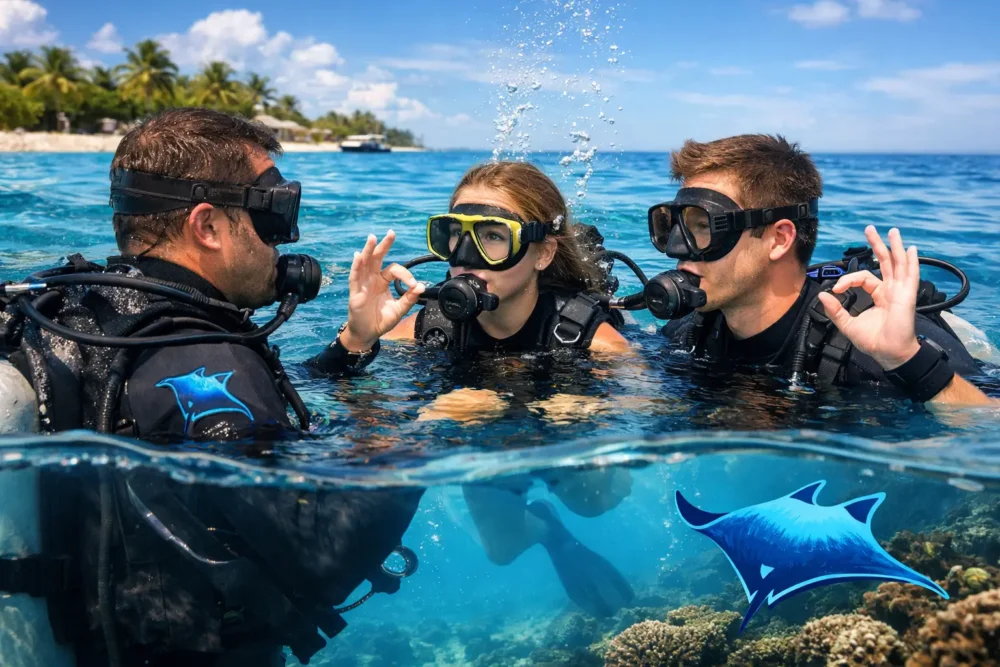
Before entering the ocean, your instructor explains the essential rules of scuba diving, how your equipment works, how to clear water from your mask, and how to recover and clear your regulator. You will also learn simple hand signals and what to do if something does not feel right. These skills are straightforward, but they are not skipped. Safety is what makes the experience fun.
The session begins in confined water or another calm, controlled setting where you can stand, practice, ask questions, and get used to breathing from a regulator. Once you are relaxed and have completed the required skills, you may continue to an open-water dive with your instructor. The exact plan depends on conditions, your comfort level, and the instructor’s professional judgment.
Why Cozumel Is a Great Place for Your First Scuba Dive
Cozumel has a way of making first dives feel special. The water is warm for much of the year, visibility can be exceptional, and the island’s protected western reefs offer bright coral formations, schools of tropical fish, sea fans, and the kind of clear blue water people picture when they imagine the Caribbean.
It is also a destination where drift diving is part of the local character. A gentle current can carry divers along a reef rather than requiring a lot of kicking. For a first-time diver, that can feel wonderfully easy when conditions are appropriate. But currents are not the same every day, and a responsible operator chooses the site and profile based on weather, water movement, visibility, and the group’s experience.
That is why small groups make such a difference. With six to eight divers rather than a packed boat, there is more room to get settled, more attention during the briefing, and more time for an instructor to notice how you are doing. You should never feel pressured to descend before you are ready just because everyone else is waiting.
What Your Day Usually Looks Like
Your experience starts with paperwork, a health questionnaire, and a conversation about your comfort in the water. Be honest here. If you are anxious, have not snorkeled in years, have asthma or another medical condition, or simply want extra reassurance, say so. The right team will explain the options clearly and may ask for physician approval when required.
Then comes the equipment fitting. Your mask, fins, buoyancy control device, regulator, tank, and weights should be checked and adjusted for you. Valet-style support is especially helpful for beginners because it lets you focus on what you are learning instead of trying to remember how every piece of gear connects on day one.
After the briefing, you practice your skills in calm water. This is where many guests go from tense to thrilled. Breathing underwater can feel unusual for the first few minutes, but most people settle in once they realize they can breathe slowly, clear their mask, and signal their instructor whenever they need help.
On the reef dive, you stay close to your PADI Professional. You are not expected to navigate, manage the boat plan, or solve problems alone. Your job is simple: breathe slowly, stay near your instructor, protect the reef by keeping your hands off it, and enjoy the view.
Is Discover Scuba Right for You?
Discover Scuba is a strong choice if you are visiting Cozumel and want a real underwater experience without taking several days out of your vacation for a full course. It works well for couples where one person is certified and the other wants to see what scuba is about, for families introducing an adult child to diving, and for travelers who have always wondered whether they could do it.
It may not be the best fit if your primary goal is to dive independently on future trips. Discover Scuba is an experience, not a certification. You are always directly supervised, and you do not leave with the same diving privileges as an Open Water Diver.
If you already suspect that scuba will become a hobby, ask about beginning the PADI Open Water Diver course instead. The course takes more time and includes additional knowledge development and skill practice, but it leads to a certification recognized around the world. Some Discover Scuba skills may be credited toward an Open Water course when completed within the applicable PADI requirements, so your first underwater session can still be a meaningful start.
How to Feel More Comfortable Before You Go
You do not need to train like an athlete, but a little preparation helps. Spend some time in a pool before your trip if you can, especially if it has been a while since you swam or used a mask. Practice floating, putting your face in the water, and breathing calmly through a snorkel. The goal is not perfection. It is familiarity.
Choose a mask that fits well if you are bringing your own, and avoid drinking heavily the night before. Hydration, sleep, and a light meal can make a noticeable difference on a boat day. If you are prone to motion sickness, plan ahead with advice from your doctor or pharmacist rather than waiting until you feel ill offshore.
Most importantly, do not compare your pace with anyone else’s. Some guests feel comfortable immediately. Others need several minutes, a second explanation, or a hand to hold while they take their first breaths below the surface. Patient instruction is not an extra – it is the standard beginners deserve.
Questions First-Time Divers Often Ask
How deep will I go?
Discover Scuba dives are conducted within PADI limits and under direct professional supervision. The actual depth is selected for the site, conditions, and your comfort. A first dive does not need to be deep to be unforgettable. Cozumel’s reefs are full of color and life in shallower water.
Can I wear glasses?
Regular glasses cannot be worn under a dive mask. Contact lenses work for many divers, although soft lenses are generally preferred and you should follow your eye-care professional’s advice. Prescription masks are also available in some cases, but should be arranged in advance.
What happens if I cannot equalize my ears?
You stop, signal your instructor, and try again slowly. You should never force equalization or push through pain. Sometimes a slower descent solves the problem; sometimes it means ending the dive. Making the conservative choice is always the right call.
Will I see marine life?
No one can promise a particular animal, but Cozumel’s reefs regularly offer colorful fish, coral, sponges, rays, and plenty of small reef activity. The best first dive is not a checklist of sightings. It is the moment you realize you are comfortable underwater and want to look around.
Make Your First Dive Personal
At Blue Magic Scuba, the goal is to give first-time divers the same care that experienced guests expect from a great Cozumel dive day: licensed operations, attentive professionals, uncrowded boats, and time to enjoy the reef rather than being processed through a large excursion group.
Ask questions before you book. Find out how many divers are in each group, where you will practice skills, who will be in the water with you, and what happens if you decide you are not comfortable continuing. Clear answers are a good sign. So is an operator who would rather adjust the plan than rush you.
Your first scuba dive does not have to prove anything. It only has to feel safe enough for curiosity to take over. When you are ready, take that first slow breath, look up at the sunlight above the reef, and let Cozumel show you why so many visitors return as divers.