
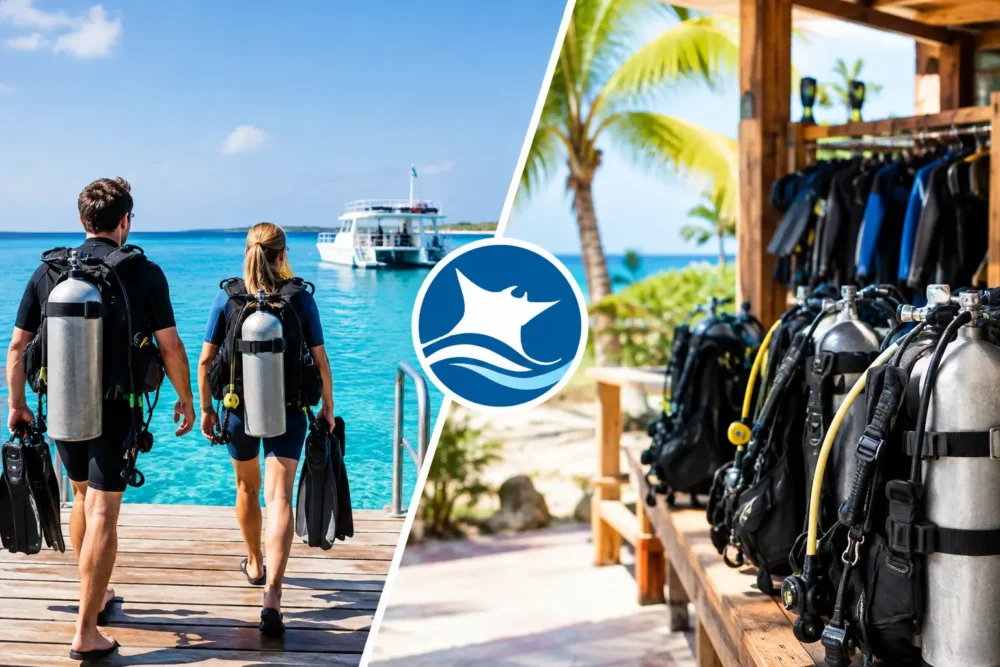
A beautiful resort can make choosing a dive operator feel like an afterthought. But on an island where the current carries you over world-famous walls, coral gardens, and schools of fish, the choice between resort diving versus dive shops can define your whole vacation.
The right option is not automatically the one in your hotel lobby or the one with the lowest posted rate. It depends on what kind of diver you are, how much time you have, and whether you want diving to be one activity on your trip or the reason you came to Cozumel.
What Resort Diving Usually Looks Like
Resort diving is built for convenience. Walk downstairs, check in with the desk, and join a scheduled boat or shore departure without coordinating transportation or researching another operator. For a traveler who wants a simple introduction to scuba, that can be appealing.
Many resort programs are designed to serve a broad mix of guests: certified divers, first-timers, snorkelers, families, and people adding a single dive between pool time and dinner reservations. The operation may be run directly by the property or by a contracted provider working from its dock.
That setup can work well when your priority is keeping the day easy. If you only want one relaxed outing and are comfortable with a fixed schedule, resort diving removes decisions. It can also be practical for a nervous beginner who wants familiar surroundings close to the hotel.
The trade-off is that hotel-based operations often need to accommodate larger, more varied groups. Boats may wait for guests from multiple resorts, dive timing can follow the property’s daily schedule, and site selection may favor the closest or easiest locations. None of that makes the diving unsafe or bad. It simply means the experience is built for volume and convenience first, rather than around a small group of divers with similar goals.
Resort Diving Versus Dive Shops: The Real Difference
A dedicated dive shop usually organizes the day around diving itself. That sounds obvious, but it changes nearly everything: boat design, departure time, group size, crew attention, equipment handling, dive-site choices, and how the staff responds when conditions change.
In Cozumel, a good independent operator can get a small group to the reef quickly, often before the busiest boats arrive. With fewer people on board, the crew has more time to learn what you enjoy. Are you newly certified and looking for calm confidence-building dives? Do you want longer bottom time on a colorful shallow reef? Are you an experienced diver hoping for a deeper wall, a stronger drift, or a quieter southern site? Those conversations matter.
Large resort trips can feel like a cattle cart when divers of every experience level are managed under one tight timetable. A small-group shop experience feels more personal. You are not asking for special treatment when the crew helps with your gear, checks how you are feeling, or remembers that you prefer a little extra weight review before the first descent. That is simply how a quality dive day should feel.
At Blue Magic Scuba, boat groups are deliberately kept to six to eight divers, which makes a noticeable difference underwater and on deck. You spend less time waiting, less time squeezed around equipment bins, and more time enjoying why you flew to Cozumel in the first place.
Boat Speed and Departure Times Matter More Than You Think
Cozumel’s reefs stretch along the island’s west coast, and travel time affects your day. A fast, well-run boat can reach excellent sites efficiently, leaving more room for relaxed surface intervals and less time staring at the shoreline.
This is where the cheapest package is not always the best value. A lower price may come with a slower boat, a crowded deck, late departures, or dive sites selected mostly because they are close. A faster departure and a capable crew can mean early access to reefs before other groups arrive, plus more flexibility when wind, current, or marine park traffic changes the plan.
Ask any operator how many divers they typically take, how early they depart, and whether they can choose sites based on group experience and conditions. Straight answers are a good sign. Vague promises of “the best reefs” without operational details are less useful than a clear explanation of how the day works.
Training Is Not the Same as Checking a Box
For beginners, the difference between resort diving and a full-service dive shop becomes especially important. A resort may offer a Discover Scuba experience that lets you try breathing underwater with an instructor. That can be a fantastic first step, especially in Cozumel’s warm, clear Caribbean water.
But trying scuba is different from learning scuba. If you want an Open Water certification, a refresher, or a specialty such as Nitrox, Deep, Drift, or Sidemount, look for a team that treats training as a personal process rather than a vacation add-on.
Good instruction has patience built into it. A nervous student should never feel rushed because the next resort activity starts in an hour. Skills should be practiced until they feel comfortable, questions should be welcomed, and instructors should explain the why behind safe diving habits. This is particularly valuable in Cozumel, where drift diving is exciting but requires solid buoyancy, awareness, and good communication.
For aspiring professionals, a dedicated shop also offers something many resort programs cannot: a view of real dive operations. Divemaster and instructor candidates benefit from seeing how boats are prepared, guests are briefed, equipment is cared for, and changing conditions are handled. Professional training should create capable leaders, not just issue certifications.
When a Resort Operator May Be the Right Choice
Resort diving deserves credit for what it does well. Choose it when you want the least complicated option, have very limited time, or are traveling with non-divers and only plan to make one easy dive. It may also make sense if the resort has a truly independent, well-reviewed operation on site with small groups, experienced instructors, and licensed boats.
The label matters less than the standards. Some hotel-based programs deliver excellent service. Some independent operators run crowded boats. Do not book based only on whether the shop is located inside a resort or on the street in town.
Instead, look at the details: group size, guide-to-diver ratio, boat condition, safety practices, equipment availability, training credentials, cancellation policies, and how the team communicates before you arrive. A friendly, responsive conversation is often the first clue that you will be cared for after you step aboard.
How to Choose a Cozumel Dive Shop That Fits Your Trip
Start with your real priorities. If your goal is two reef dives a day with time to relax afterward, choose an operator known for efficient boats and organized morning departures. If you want a complete dive vacation, consider whether the shop can also help arrange lodging, airport planning, courses, and a schedule that leaves room for both diving and the island.
Certified divers should ask about typical group size and whether guides match the plan to experience level. New divers should ask who will be in the water with them and how much time is available for skills and questions. Advanced divers should ask directly about deeper profiles, drift conditions, specialties, and whether the operator regularly serves divers who want more than a standard resort route.
Equipment service is another quiet difference. Having tanks carried, gear organized, and rinsing handled after the dive may sound small. After two sun-filled dives, it feels like the kind of hospitality that lets you stay focused on the reef instead of chores.
A Cozumel dive trip should feel personal from the first message to the final surface interval. Choose the operation that listens to the kind of diving you want, gives you clear answers, and treats you like a guest who belongs on the boat – not another name on a manifest.