
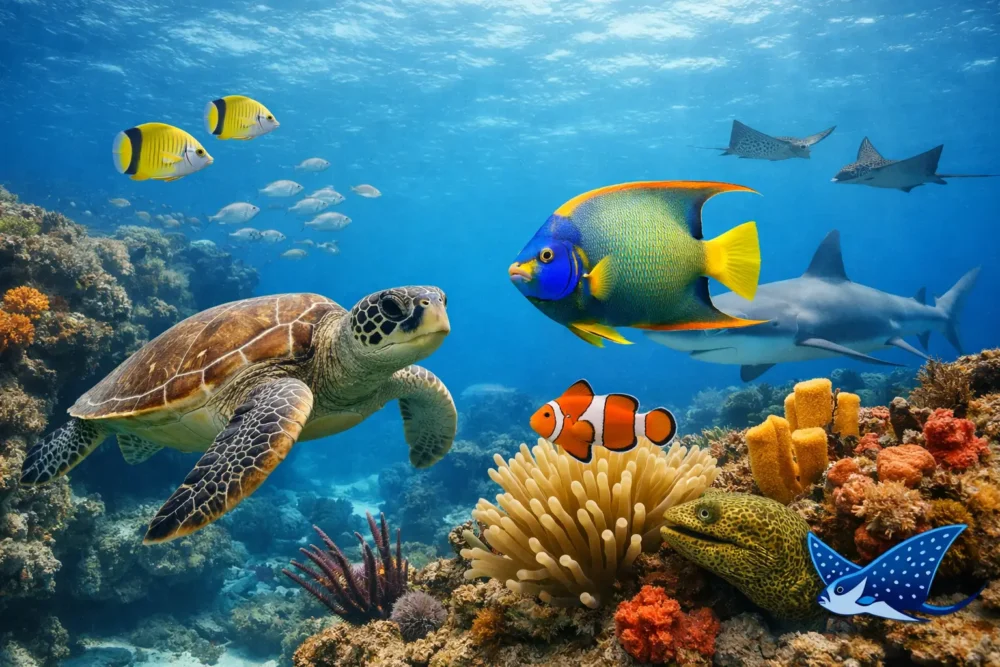
A sea turtle easing past a wall of purple sponges is not a rare highlight in Cozumel. It can be the quiet moment that makes an already beautiful drift dive feel unforgettable. If you are wondering what marine life can you see in Cozumel, expect an active Caribbean reef packed with color, personality, and the occasional surprise around a coral-covered corner.
Cozumel sits beside the Mesoamerican Reef, and its protected western reefs offer clear water, warm temperatures, and dramatic coral formations. Conditions change by site, season, current, and time of day, so no ethical dive operator should promise a specific animal. What Cozumel reliably delivers is a healthy-looking reef environment where even an ordinary dive is full of fish, corals, and fascinating small life.
What marine life can you see in Cozumel’s reefs?
The short answer is plenty. Turtles, eagle rays, nurse sharks, moray eels, lobsters, schooling fish, vibrant angelfish, and towering sponges are all realistic possibilities. The longer answer is that Cozumel rewards divers who slow down and look both into the blue water and closely along the reef.
A typical two-tank morning might begin with schools of blue tangs flowing over the reef like a moving ribbon. A few minutes later, your guide may point out a spotted moray tucked beneath a ledge, a green turtle grazing near a sandy patch, or a splendid toadfish peering from its home in the reef. That mix of big-animal excitement and tiny-detail discovery is what keeps divers coming back.
Sea turtles: a favorite Cozumel encounter
Hawksbill turtles are among the most loved animals on Cozumel dives. Their patterned shells and pointed beaks make them easy to recognize, and they are often seen cruising reef edges or resting beneath overhangs. Green turtles also appear, though hawksbills are frequently the turtle divers hope to see on the reef.
The best turtle encounter is always on the turtle’s terms. Give it room, stay calm, and never block its path to the surface. A relaxed turtle that chooses to continue feeding while divers watch from a respectful distance is far better than a rushed photo opportunity.
Rays, sharks, and life in the blue
Spotted eagle rays are one of Cozumel’s signature sightings. With their white-spotted backs and broad, graceful wings, they can seem to float through the current without effort. They are often more common in the cooler months, especially from late fall through early spring, but wildlife follows its own schedule. You may see one on any given day, or you may enjoy a great dive without one.
Southern stingrays and yellow stingrays are also possible, particularly over sand channels and flatter reef sections. Look carefully and you may spot one partly covered in sand, with only its eyes visible.
Nurse sharks are another welcome possibility. These calm, bottom-dwelling sharks may rest beneath ledges or cruise slowly along the reef. Caribbean reef sharks can appear too, but they are less predictable and should be considered a bonus rather than an expectation. Seeing any shark in its natural reef habitat is a privilege, not a reason for alarm. These animals are an important part of a balanced marine ecosystem.
Keep an eye into the open water during your safety stop and while drifting along the wall. Barracuda, jacks, and larger schools of fish often patrol the blue. Dolphin sightings can happen, but they are unusual enough that they should never be sold as part of a standard reef dive.
Cozumel’s colorful reef fish
Even when larger animals stay out of sight, Cozumel’s fish life carries the dive. Queen angelfish and French angelfish bring flashes of yellow, blue, and black. Stoplight parrotfish graze on algae and help keep reefs healthier. Blue chromis hover in shimmering clouds above coral heads, while sergeant majors gather in busy groups near the shallows.
You may also find trumpetfish hanging vertically beside sea fans, trying to disappear into the reef structure. Smooth trunkfish move with a comical, boxy wobble. Peacock flounder can vanish against the sand until their electric-blue markings catch the light. Groupers, including Nassau and black groupers, hold position near ledges and swim-throughs, watching divers with a serious expression.
For photographers and observant divers, the reef’s smaller residents are often the real prize. Pederson cleaner shrimp, arrow crabs, flamingo tongue snails, tiny blennies, and colorful nudibranchs may be present if you take the time to look. Your guide’s local knowledge matters here. A patient guide who knows where to check beneath a sponge or along a particular coral head can turn a good dive into a memorable one.
Morays, toadfish, and creatures hiding in plain sight
Cozumel is famous among Caribbean divers for the splendid toadfish, a species found only in the waters around Cozumel. It is not flashy from a distance, but its mottled coloring, broad head, and expressive face make it an exciting find. Toadfish usually shelter under ledges, in cracks, or around reef rubble, so this is exactly the kind of animal a guide can help you locate without disturbing it.
Green moray eels and spotted morays are commonly seen with their heads emerging from holes. Their open-mouth posture may look intimidating, but it is simply how they move water across their gills. Lobsters are another regular sight beneath ledges, often sharing shelter with crabs and small reef fish.
Seahorses occasionally appear in Cozumel, but they are rare and exceptionally well camouflaged. Treat any promise of a seahorse sighting with caution. The honest magic of reef diving is that some of the best sightings cannot be scheduled.
Coral, sponges, and the habitat behind the animals
Marine life in Cozumel is not just about animals that swim. The reef itself is the foundation of every encounter. Massive barrel sponges, rope sponges, sea fans, brain corals, and branching corals create a layered habitat full of hiding places, feeding grounds, and cleaning stations.
On sites such as Palancar, Santa Rosa, and Yucab, you may drift past coral pinnacles, sand chutes, tunnels, and dramatic walls. Each shape creates a different kind of habitat. A sandy area can hold rays and garden eels, while an overhang may shelter lobster, squirrelfish, or a resting nurse shark. Coral heads attract schools of juvenile fish, and sea fans can hide a tiny crab or shrimp in plain sight.
The reef also changes with depth. Shallow sites may feel brighter and more colorful, while deeper walls offer a grander sense of scale and more opportunities to look into the blue. Your certification level, comfort in current, and the day’s conditions should guide the site choice, not simply a wish list of animals.
When is the best time to see Cozumel marine life?
Cozumel offers year-round diving, and every season has something to recommend it. Water is generally warmer in summer, while winter can bring cooler water, breezier surface conditions, and stronger chances of seeing eagle rays. Visibility is often excellent, but weather and currents can affect any day of diving.
Summer and early fall can feel especially lively on the reef, with warm water and abundant fish activity. Winter visitors may appreciate the seasonal ray potential and comfortable air temperatures, although a wetsuit may be more welcome underwater. The best time is often the time when you can travel, dive unhurriedly, and give yourself several days on the water.
More dive days also mean more chances to see different animals. A turtle may show up on your first dive, while the toadfish, ray, or nurse shark appears on day three. Cozumel is not a destination to rush through on one crowded boat trip.
How to get the most from your wildlife dives
Marine life sightings improve when divers are relaxed, properly weighted, and aware of their surroundings. Good buoyancy lets you hover without touching the reef, conserve air, and spend more time observing. It also protects the corals and sponges that every reef animal depends on.
Stay close enough to hear your guide’s attention signal, but do not crowd the group. Look ahead into the blue for rays and turtles, then scan slowly along the reef for eels, crab life, and camouflaged fish. Avoid chasing animals, feeding fish, touching coral, or placing a hand on the reef to steady yourself. Those small choices protect the experience for the next diver.
Small groups make a genuine difference, especially for wildlife-focused divers and first-time guests. At Blue Magic Scuba, boats are intentionally kept uncrowded, giving guides more opportunity to point out the details that larger groups often swim past. New divers receive the calm, close attention they need, while experienced divers can enjoy the rhythm of a well-planned Cozumel drift dive.
Bring curiosity rather than a checklist. The eagle ray may be the story you tell at dinner, but a tiny toadfish tucked under a ledge or a turtle feeding peacefully beside you is often the moment that stays with you longest.