
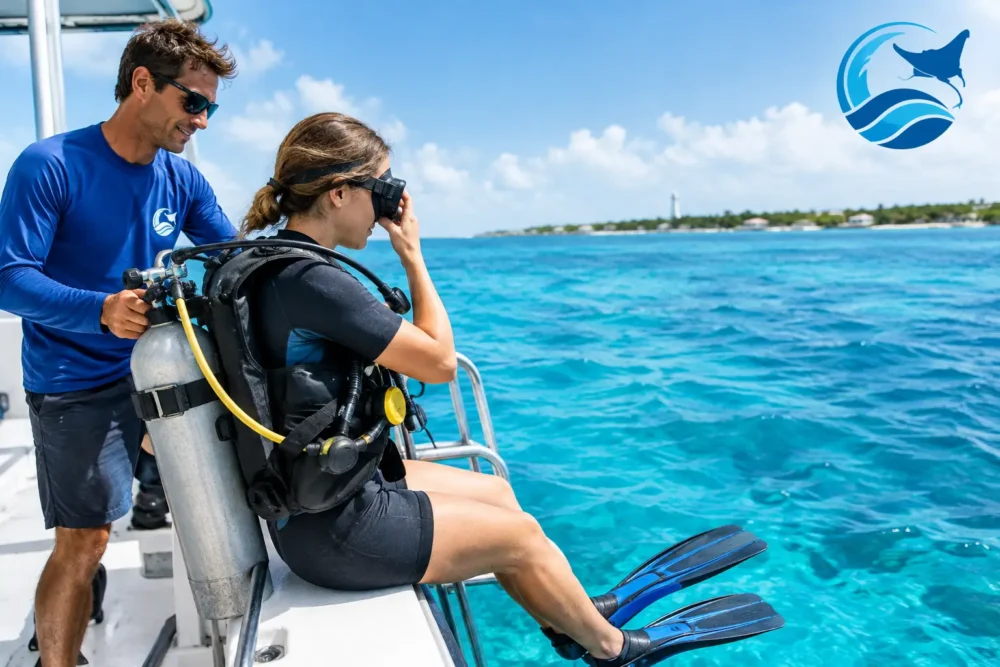
The boat is moving south along Cozumel’s shoreline, the water is bright blue, and a reef that would take far too long to reach from shore is only minutes away. So, can beginners boat dive? Absolutely – when the dive plan, conditions, equipment, and supervision fit the diver. For many new divers, a guided boat dive is not the intimidating next level they imagine. It is the easiest, most comfortable way to experience the Caribbean.
The key is not whether you have logged 100 dives or one. It is whether the operator takes time to understand your certification level, recent experience, comfort in the water, and the day’s conditions. A great first boat-dive experience feels organized and personal from the moment you step aboard, never rushed or crowded.
Can Beginners Boat Dive in Cozumel?
Yes. Certified Open Water divers can generally join beginner-appropriate boat dives, and students may complete training dives from a boat when their instructor determines it is appropriate. People who have never been scuba diving can sometimes participate in a supervised Discover Scuba Diving experience, depending on medical eligibility, sea conditions, and the day’s plan.
Cozumel is particularly well suited to newer divers because its reefs are close to shore, the water is usually warm, and visibility is often excellent. Colorful coral formations, schools of tropical fish, turtles, and gentle reef slopes can begin at depths suitable for beginners. You do not need to descend deep to have a real Cozumel dive.
There is one important qualifier: Cozumel is famous for drift diving. The current can range from mild to strong, and that changes the right site for a new diver. A responsible crew does not force a nervous or newly certified guest onto a fast drift simply because it is on the schedule. They choose a protected or manageable site, explain the current plan clearly, and keep the group together.
Why a Boat Can Be Easier Than Shore Diving
New divers sometimes assume shore diving must be simpler because the ground is nearby. In reality, walking over uneven entry points with a tank on your back, timing waves, and navigating back to shore can create more work than a boat entry.
On a well-run dive boat, the crew brings you close to the reef. You gear up with help, receive a thorough briefing, take a giant stride or controlled entry, and descend with your guide. At the end of the dive, the boat picks up the group instead of requiring everyone to swim back through a long shallow area.
That support matters. A smaller boat group gives a guide time to notice if your mask is leaking, your weight feels wrong, or you simply need a minute before entering. Personal equipment assistance also means you can focus on breathing, buoyancy, and enjoying the view rather than wrestling with hoses and straps.
Boat diving does involve a few new skills, but none are beyond a beginner. You will learn where to sit during travel, how to keep your gear secure, how to make a safe entry, and how to use the boat ladder after the dive. Your crew should explain every step before it happens.
What Your First Boat Dive Should Feel Like
A beginner-friendly boat day starts long before the first splash. The staff should ask about your certification, your last dive, any anxiety you have, and whether you need a refresher. Honest answers are useful. Saying, “I was certified two years ago and have not been in the water since,” gives your team the information they need to provide extra coaching or recommend a Scuba Refresher.
Before departure, expect a site briefing that covers the entry, maximum depth, current direction, hand signals, buddy procedures, and how the group will return to the boat. In Cozumel, that briefing should also explain drift-diving etiquette: stay close to your guide, keep the reef on the agreed side, maintain awareness of the group, and surface only as instructed or in an emergency.
Underwater, the pace should be calm. A good guide does not race from one landmark to another. They check that everyone is comfortable, point out marine life, help the group maintain the planned depth, and adjust when needed. Beginners often use air faster than experienced divers, especially on early dives. That is normal. The dive should be planned around the group, not around anyone’s ego.
Afterward, you should have time to settle in, hydrate, ask questions, and enjoy the ride to the next site. Fast, uncrowded boats make a meaningful difference here. Less time in transit and fewer divers competing for attention create a more relaxed day for everyone.
When Beginners Should Wait or Choose Another Option
Being a beginner does not automatically make boat diving a bad idea. But there are days when the smart choice is to postpone, take a refresher, or select a more protected experience.
If you are uncomfortable swimming, unable to clear your ears reliably, prone to serious motion sickness, or feeling panicked at the thought of descending in open water, speak up before departure. Those concerns do not mean diving is off limits. They may mean a pool session, shore-based skills practice, or a private instructor is the better next step.
Weather and sea state matter too. A boat can be stable and professionally operated, yet choppy surface conditions can make entries and exits harder. Strong current can also turn a beautiful reef into an unsuitable site for an inexperienced group. The best operators are willing to change sites, modify the plan, or cancel when safety calls for it.
Medical readiness is equally important. Complete the required health screening honestly and do not self-diagnose your way around a concern. If a question requires physician clearance, get it before your trip whenever possible. This protects you and avoids losing valuable vacation time at the dock.
How to Prepare for Your First Beginner Boat Dive
A little preparation can make your first day feel dramatically easier. Get a full night of sleep, eat a light meal, and arrive hydrated. Avoid alcohol the night before, especially if you are already nervous or susceptible to seasickness.
If you are concerned about motion sickness, discuss suitable prevention options with a medical professional before traveling. Many remedies work best when taken before you feel ill. Once aboard, fresh air, looking toward the horizon, and staying lightly fed can also help.
Bring your certification card or digital proof, swimsuit, reef-safe sun protection for time on the boat, and a dry layer for the ride home. If you own a mask, bringing one that fits your face well can boost confidence. If you are renting, ask for time to test the mask and adjust the rest of your equipment before leaving the marina.
Most importantly, review the basics. Practice slow, steady breathing. Remember the rule to never hold your breath. Refresh your hand signals and think through what you would do if you needed help: signal your buddy or guide, stay calm, and communicate. You do not need to perform perfectly. You need to stay aware and ask for support early.
Choosing the Right Cozumel Boat Operator
For new divers, the cheapest seat on the largest boat is not always the best value. Look for a licensed operation with experienced dive professionals, clear safety procedures, maintained equipment, and a stated commitment to small groups. Ask how many divers are assigned to each guide, whether they tailor sites to experience level, and what happens if conditions are stronger than expected.
It is also worth asking what support is included. Assistance carrying gear, setup checks, water and snacks, shaded seating, and help at the ladder may sound like small details, but they shape how relaxed a beginner feels. A team that knows your name and remembers that this is your first boat dive will usually provide a very different experience from a high-volume excursion.
At Blue Magic Scuba, small groups of six to eight divers, attentive crew service, and carefully selected reef sites help new guests experience Cozumel scuba diving with confidence. The goal is never to make a beginner prove something. It is to give them the space, guidance, and conditions to enjoy what makes this island extraordinary.
A First Boat Dive Is the Beginning, Not the Test
Your first boat dive does not have to be flawless to be successful. Maybe you take an extra minute on the surface. Maybe you need help adjusting your weights, or you surface with a new question about current. Those are normal parts of learning, and a professional team will treat them that way.
Choose a crew that welcomes questions, be honest about your experience, and let the conditions set the pace. With the right support, that first giant stride can quickly become the moment you realize the boat was not a barrier to the reef – it was your best way to reach it.