
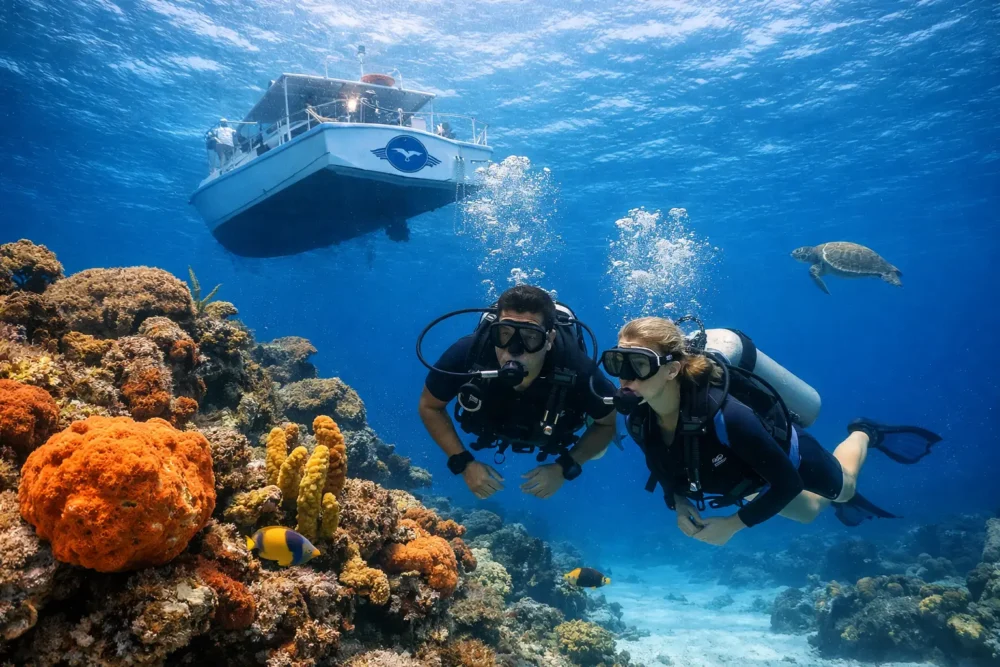
Cozumel is not a destination where you simply drop in, swim around, and head back to shore. The island’s best sites are shaped by current, boat timing, experience level, and the quality of the people guiding the day. This Cozumel reef diving guide helps you understand what makes local diving special and how to choose a trip that feels personal rather than packed.
A great Cozumel dive day often starts early: calm water at the marina, a fast ride south, and a small group getting ready while the crew handles the details. Then you descend into clear blue water, settle into the current, and let a reef wall, coral garden, or swim-through reveal itself one turn at a time. It is relaxed when it is done right, but it is never random.
What Makes Cozumel Reef Diving Different
Cozumel sits beside the Mesoamerican Barrier Reef, and its western shoreline is protected by the Cozumel Reefs National Marine Park. Warm Caribbean water, impressive visibility, and healthy reef structure make it a favorite for vacation divers and professionals alike.
The defining feature is drift diving. Currents commonly carry divers along the reef, so there is less kicking and more time to watch the scenery unfold. You may pass towering sponges, soft corals moving in the water, schools of grunts and snapper, turtles resting beneath ledges, and the occasional eagle ray gliding through the blue.
Drift diving is also why boat operations matter so much. Your group enters together, follows the planned route, surfaces together, and is picked up by the boat. On a well-run trip, the captain and crew track the group, conditions, and surface traffic closely. That allows divers to enjoy the ride rather than worrying about logistics.
Conditions change by site and day. Some dives have a gentle current that feels almost effortless. Others move faster and call for good buoyancy, awareness, and comfort maintaining position near a buddy. A responsible operator adjusts the reef selection to the group, weather, and current instead of treating every dive like the same excursion.
The Best Cozumel Reefs for Your Experience Level
There is no single “best” reef for every diver. The right site depends on your certification, recent experience, air consumption, and what you want from the day.
Easy reefs for new and returning divers
Shallow reefs such as Paradise, Chankanaab, and Yucab are often excellent choices for new Open Water divers, people returning after a long break, and guests completing a Discover Scuba experience. These areas can offer bright coral, plentiful fish life, manageable depth, and enough structure to make every minute interesting.
Shallow does not mean boring. Cozumel’s reefs are full of small moments: a spotted moray peeking from a crevice, a nurse shark tucked under coral, a juvenile fish hiding in a sea fan, or a turtle cruising past at eye level. New divers often have more fun when they are not pushed beyond their comfort zone chasing a famous deep site.
Signature sites for confident certified divers
Palancar is the name many divers know before they arrive, and for good reason. The Palancar reef system includes dramatic formations, coral towers, sandy channels, and swim-throughs that can make a dive feel like a moving Caribbean postcard. Individual sections vary in depth and challenge, so the specific Palancar site matters.
Columbia is another standout for experienced divers who appreciate bigger reef scenery and deeper profiles. It can offer broad coral buttresses, impressive wall sections, and that wide-open blue water feeling that keeps divers coming back to Cozumel year after year.
Santa Rosa Wall is a classic choice when conditions and diver experience align. Its wall, overhangs, and changing topography reward good buoyancy and situational awareness. It is not a place to rush. Slow down, check every ledge, and you may find lobsters, crabs, sleeping turtles, or larger fish passing beyond the reef.
Deep, fast, and specialty-focused dives
Advanced divers may want deeper walls, stronger drift, or specialty training such as Deep, Drift, Nitrox, or Sidemount. These experiences can add range to a Cozumel trip, but the trade-off is clear: deeper profiles bring shorter no-decompression time, while faster current demands tighter teamwork and stronger control.
Nitrox can be especially useful for divers planning multiple days of recreational diving, depending on their profiles and certification. It does not make deep diving risk-free or replace conservative planning. It can, however, provide more flexibility on certain repetitive dives when used correctly.
A Cozumel Reef Diving Guide to Drift Skills
You do not need to be an expert to enjoy drift diving, but you do need to be ready to listen, stay close, and move with purpose. Before the boat leaves, pay attention to the briefing. It should cover the entry, expected current, maximum depth, reef route, hand signals, surface procedure, and what to do if you become separated.
Once underwater, keep your profile stable and your buddy within easy sight. Avoid fighting the current or constantly changing depth to chase every fish. The reef will keep bringing new things to you. Good trim and calm finning conserve air, protect the coral, and make the experience more enjoyable for the entire group.
The most common mistake is treating drift diving like a race. It is not. The current sets the pace, and the goal is to stay controlled enough to notice the reef. If you are newly certified, tell your guide. If you have not dived in a year, say that too. Honest information lets the crew choose a better site and give you the attention you deserve.
When to Go Diving in Cozumel
Cozumel is a year-round diving destination, which is one reason it works so well for a dedicated dive vacation. Water temperatures are generally warmer from late spring through early fall and cooler in winter, when many divers prefer a thicker wetsuit.
Summer can bring very warm water and excellent marine activity, but it also overlaps with hurricane season. Winter often brings cooler water and occasional north winds, known locally as norte conditions, which can affect boat schedules or make some days choppier. A flexible itinerary is smart at any time of year, especially if you have your heart set on specific southern reefs.
Visibility is often outstanding, but no honest shop can promise a fixed number every day. Rain, wind, current, and seasonal changes all play a role. The good news is that Cozumel still delivers memorable diving across a wide range of conditions because the reef structure itself is so rich.
Why Small Groups Change the Whole Day
A reef can be world-class and still feel disappointing if the boat is crowded, the pace is rushed, or you spend the dive trying to keep track of too many strangers. Small groups make a real difference in Cozumel, where current and reef conditions reward attentive guiding.
With six to eight divers rather than a packed boat, guides can better match groups by experience, notice when someone needs extra help, and spend more time showing guests the details that are easy to miss. It also makes entries, exits, and surface pickup less chaotic.
This is where Blue Magic Scuba builds its trips around the experience, with fast boats, attentive crew support, and deliberately uncrowded groups. For travelers, that means less waiting, more personal guidance, and a better chance of reaching less-visited reefs before the busiest boats arrive.
Small-group service is especially valuable for nervous first-time divers and certification students. A patient instructor can answer questions before the descent, help refine buoyancy without making it a public performance, and keep the experience encouraging. For seasoned divers, it means a more focused dive and fewer compromises based on the largest group onboard.
Plan a Safer, More Enjoyable Reef Day
Bring or rent equipment you are comfortable using, but do not underestimate the value of a crew that handles setup, rinsing, and loading. Save your energy for the water. Confirm your certification card, log recent dives honestly, and let the shop know about any medical considerations or equipment preferences before departure.
If you are visiting as a couple or group with mixed experience, ask for a plan that respects everyone’s limits. The strongest diver does not always need the deepest site, and the newest diver should not feel pressured to prove anything. Cozumel rewards repeat visits, so there is no need to force every big-name reef into one trip.
Leave room in your schedule for training if a skill is holding you back. A Drift specialty can build confidence in current. A Deep course can help qualified divers understand planning and gas management at greater depths. Even a buoyancy-focused session can transform how much reef life you see.
The best Cozumel reef days are rarely the ones with the longest checklist. They are the days when you feel prepared, looked after, and free to watch the reef drift by. Choose a crew that knows the water, respects your level, and gives you enough space to make the Caribbean feel like it belongs to your small group for a while.