
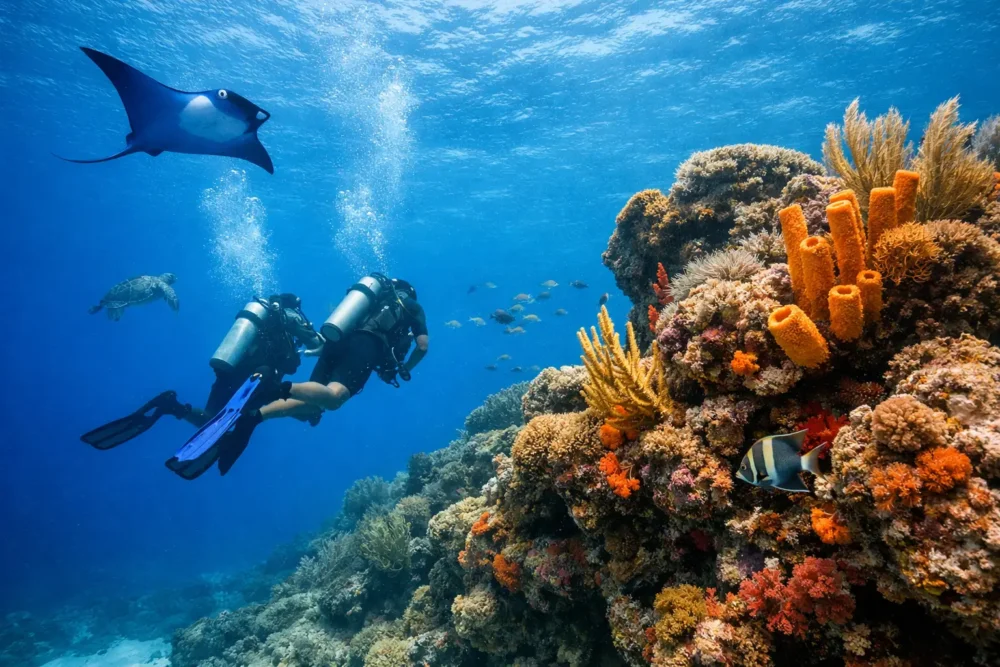
The best Cozumel reef sites do not all deliver the same kind of dive. One morning can mean a calm, shallow coral garden filled with juvenile fish and curious sea turtles. The next can be a fast, blue-water drift along a wall where the reef falls away beneath you. That variety is exactly why Cozumel rewards divers who choose their sites with intention rather than simply taking the next available boat.
Cozumel scuba diving at its best is personal: a small group, a knowledgeable guide, the right reef for your comfort level, and enough room on the boat to enjoy the day. Whether you are returning for your twentieth Caribbean trip, getting certified, or finally taking your first breath underwater, knowing what each reef area offers helps you get more from every tank.
How Cozumel Reef Sites Are Different
Cozumel sits beside the Mesoamerican Barrier Reef, and much of its diving takes place along the island’s protected western shore. The reefs are known for clear water, healthy coral structure, abundant marine life, and gentle-to-spirited current that makes drift diving so memorable.
Current is the biggest variable. It can carry you effortlessly past sponges, swim-throughs, and coral heads with very little finning, which is a dream for many certified divers. But it also means the right site depends on conditions, experience, and comfort in the water. A good dive operation does not force every diver into the same plan. It matches the reef and route to the group, then adjusts as weather and current change.
Visibility often feels almost unreal, especially on bright, calm days. Still, conditions are conditions. Wind, seasonal weather, current, and recent rain can affect the surface and the water clarity. The goal should never be checking a famous reef off a list at any cost. The goal is having a safe, relaxed, genuinely great dive.
Cozumel Reef Sites for Easy, Colorful Diving
Paradise Reef
Paradise Reef is one of the most approachable names in Cozumel diving. Its shallower profile, coral formations, and frequent fish activity make it a favorite for newer divers, refreshers, Discover Scuba participants, and anyone who wants an unhurried first dive of the trip.
Do not mistake shallow for boring. Paradise can be packed with color: angelfish, trunkfish, schools of grunts, lobsters tucked beneath ledges, and the occasional turtle passing through. It is also an excellent place to slow down and practice buoyancy, because better control means you notice more of the small life living in and around the reef.
Chankanaab
Chankanaab offers another welcoming option with interesting coral structures and a manageable depth range. It can work well for divers who want easy conditions without giving up the classic Cozumel look of big sponges, bright fish, and clear blue water.
For families traveling with divers at different experience levels, sites like Paradise and Chankanaab can make a big difference. A nervous first-time diver needs patience and simple, clear coaching. Their more experienced travel partner still deserves a reef worth seeing. The right guide can make both feel like the day was built for them.
Santa Rosa Shallows
Santa Rosa Shallows is a strong choice when you want more reef architecture without necessarily committing to a deeper profile. Expect large coral heads, sandy channels, and plenty of places to look for hidden marine life. It is often a wonderful bridge between easy reef diving and the more dramatic walls farther south.
The Signature Cozumel Drift Reefs
Palancar Gardens and Palancar Caves
Palancar is not just one reef experience. It is a large reef system with different sections that can suit a range of divers. Palancar Gardens is known for open coral formations, lively fish life, and a colorful, spacious feel. It is the kind of site where a relaxed drift can make an hour disappear quickly.
Palancar Caves adds more topography. The name sounds intimidating to some divers, but much of the appeal is in broad swim-throughs, arches, and light-filled passages rather than enclosed cave diving. Your guide should always explain the route, confirm your comfort level, and offer an easy alternative if overhead-like environments are not your thing.
For confident recreational divers, this is often where Cozumel delivers its postcard moment: sunlight filtering through reef structure, a turtle gliding over the coral, and a current that carries the group smoothly onward.
Colombia Shallows and Colombia Deep
The Colombia area is a favorite for divers who want a more remote feeling and some of the most impressive reef scenery on the island. Colombia Shallows can offer broad coral formations and strong marine-life potential at accessible recreational depths. Colombia Deep is more suited to experienced divers who are comfortable with depth, current, and disciplined gas management.
The trade-off is simple: deeper sites can offer dramatic walls, larger formations, and a more adventurous feel, but they reduce bottom time and demand sharper awareness. A Deep specialty course can be valuable if you want to build the judgment and skills to enjoy those profiles confidently. Nitrox can also be a smart option for repetitive diving days, depending on your planned depth and your certification.
Punta Sur
Punta Sur has earned its reputation among advanced divers. Located near the southern end of the marine park, it can bring stronger current, deeper profiles, dramatic wall scenery, and occasional larger marine life. It is not the place to push past your training limits just because you heard it is famous.
When conditions and experience line up, Punta Sur can be extraordinary. When they do not, choosing a different reef is the professional call. Great diving is not about proving something. It is about coming back to the boat excited, comfortable, and ready for the next dive.
Choosing the Right Reef for Your Experience
A dive plan should start with more than your certification card. Tell your crew about your recent diving, comfort with current, air consumption, camera needs, and any nerves you may be carrying. There is no prize for pretending a strong drift or deeper wall feels easy when it does not.
Newly certified divers often do best starting on forgiving reefs, especially if it has been months or years since their last dive. A refresher and a calm first site can bring confidence back quickly. Divers with solid recent experience may want to build toward Palancar, Colombia, or more advanced southern reefs as conditions allow.
Photographers may prefer slower sections with strong macro life, more time around coral heads, and a group pace that does not race past every subject. Divers who love wide-angle reef scenes may prioritize big formations, swim-throughs, and wall profiles. If you are learning, the best site is often the one that gives you space to focus on buoyancy and awareness rather than task-loading you with too much current or depth.
Why the Boat Experience Matters as Much as the Reef
Even a world-class reef can feel rushed on an overcrowded boat. A small group changes the entire rhythm of the day. There is more room to ask questions, more attention during briefings, and a better chance that the guide can adapt the dive to the people actually in the water.
At Blue Magic Scuba, groups are deliberately kept small, typically six to eight divers, with fast boats and attentive crew support. That matters when you want to reach less-visited reef sites, move efficiently between dives, or simply avoid being one of dozens of divers dropping onto the same coral formation at once.
Personal service also helps before you splash in. A crew that handles equipment carefully, checks fit, and gives a clear site briefing lets you put your energy where it belongs: enjoying the reef. For students and first-time divers, that support can turn anxiety into the kind of confidence that makes a new diver want to keep learning.
Make Your Reef Plan Flexible
The smartest Cozumel dive itinerary usually has a little structure and plenty of flexibility. Start with reefs that match your current comfort level, then let the weather, current, and your own energy guide the next days. If the southern reefs are calling and conditions are right, go for it. If a relaxed shallow afternoon sounds better after two big drift dives, that is a great choice too.
Bring a reef-safe mindset with you. Maintain careful buoyancy, avoid touching coral, secure dangling gauges and cameras, and follow your guide’s spacing and current procedures. These reefs have been giving divers unforgettable days for generations, and every thoughtful diver helps protect what comes next.
Your perfect Cozumel reef may be a famous wall, a quiet shallow garden, or a swim-through lit by the afternoon sun. Let your experience level set the starting point, trust the conditions, and give yourself enough time on the island to find the reef that feels made for you.