
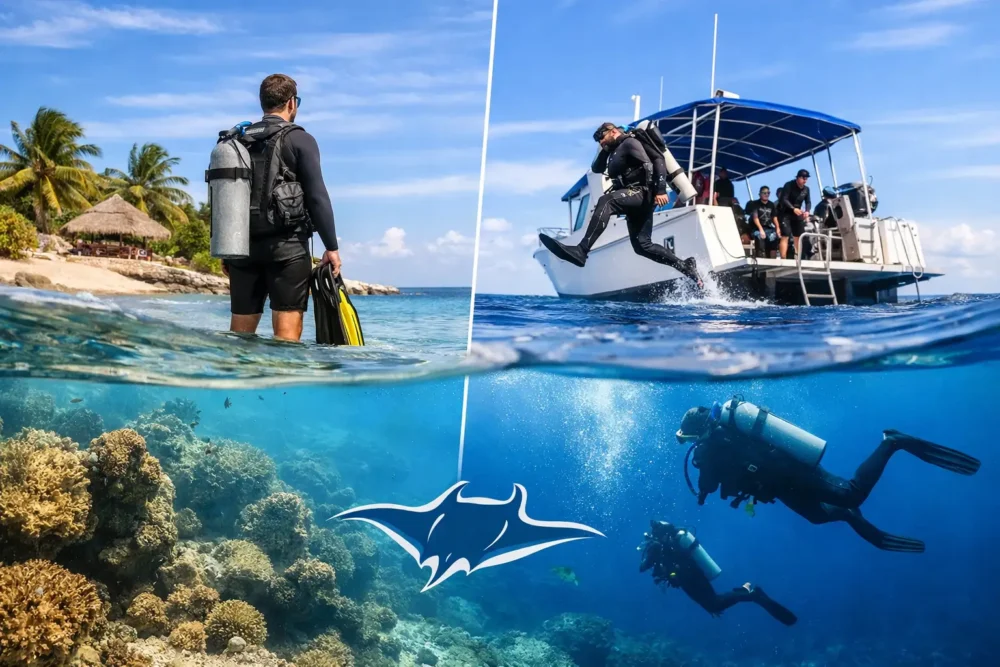
A Cozumel dive day can look very different depending on how you enter the water. In the Cozumel shore versus boat diving conversation, the real question is not which option is universally better. It is which one gives you the reef experience, comfort level, and pace you came to Mexico for.
Shore diving can be simple, flexible, and worthwhile at the right site. Boat diving is how most visitors reach Cozumel’s famous southern reefs, walls, and drift dives. For many certified divers, that difference is the deciding factor.
Why Boat Diving Defines the Cozumel Experience
Cozumel is celebrated for clear Caribbean water, healthy coral formations, swim-throughs, turtles, eagle rays, and gentle-to-lively currents that carry divers along the reef. Many of the island’s most memorable sites sit along the protected west coast and are best accessed by boat.
A boat gets you beyond the shoreline and directly to reef systems that would be impractical or impossible to reach on a standard shore entry. Instead of spending a large part of the dive swimming over sand or navigating a long surface route, you descend near the reef and spend your bottom time where the action is.
That matters when you have traveled to Cozumel for reefs such as Palancar, Colombia, Santa Rosa, Paso del Cedral, and Punta Sur. These sites are known for their scale and variety: coral buttresses, dramatic drop-offs, tunnels, schools of fish, and wide-open blue water. The experience feels less like a beach dive and more like being carried through a living underwater landscape.
Boat diving also makes Cozumel’s signature drift diving more accessible. Your group enters together, follows the current with a professional guide, and the boat tracks your route from the surface. When the dive ends, you surface, signal the crew, and are picked up. There is no need to swim back to the point where you started.
For visitors who want Cozumel scuba diving at its best, this is usually the big advantage: more reef, less effort getting to it.
Cozumel Shore Versus Boat Diving: The Real Differences
The shore-diving appeal is easy to understand. You can often move at your own pace, plan a dive around your schedule, and avoid a boat ride. For divers staying near a suitable shore-access location, it can be a relaxed way to get wet, test equipment, refresh skills, or enjoy an easy afternoon underwater.
But Cozumel shore diving is site-dependent. The western shoreline has docks, seawalls, boat traffic, hotel infrastructure, ironshore, and variable entries. A site that looks convenient from land may involve uneven footing, steps, surge, or a substantial swim before the reef becomes interesting. Conditions can change quickly with wind and weather, too.
Boat diving has more structure. You work around departure times, follow the day’s dive plan, and rely on the crew to select sites suited to conditions and diver experience. In exchange, you gain access to a far broader range of reefs, easier entries, surface support, and a guide who knows the local current patterns and marine life.
For most vacation divers, boat diving is also physically easier. A giant stride or controlled entry is usually far more comfortable than carrying equipment across rocky ground, negotiating waves, then making a long surface swim. After the dive, you climb a ladder rather than walking out over a shoreline with fins, tank, and weights.
Neither style is automatically right for everyone. A confident independent diver with a convenient, approved entry point may genuinely enjoy shore diving. A first-time visitor who wants iconic reefs, professional guidance, and minimal logistics will usually get more from a boat.
What You Will See
Shore sites can deliver enjoyable encounters with reef fish, juvenile marine life, sand flats, seagrass, and smaller coral structures. They can be especially rewarding for photographers who want to take their time looking for macro subjects or divers who simply want a low-pressure extra dive.
Still, the reefs most people picture when they imagine Cozumel are generally boat reefs. This is where large coral heads rise toward the sunlight, where sponges and sea fans create color across the wall, and where a current can reveal a new scene every few minutes. One moment you may be watching a green sea turtle cruise past a ledge; the next, you may be gliding over a school of grunts while a spotted eagle ray passes in the blue.
The boat advantage is not only about famous names. A good local operation can choose a less-visited reef based on the weather, currents, crowds, and your group’s certification level. That flexibility can make the day feel personal rather than processed.
At Blue Magic Scuba, small groups of six to eight divers help keep that experience focused. You are not waiting behind a large excursion group to enter the water, and your guide has a realistic opportunity to learn what you want from the dive day.
Currents, Confidence, and Safety
Cozumel’s currents are one of its greatest strengths, but they deserve respect. Drift diving means you are moving over the reef rather than fighting to stay in one place. In mild conditions, it can feel effortless and exhilarating. In stronger conditions, it requires buoyancy control, awareness, and the discipline to stay with your buddy and guide.
For certified divers who have never drift dived, a guided boat dive is often the ideal introduction. Your guide can explain entries, descent procedures, spacing, hand signals, safety stops, and surface pickup before you get in the water. The crew is there to support the plan from start to finish.
Shore diving is not necessarily free of current concerns. Nearshore conditions can include surge, wave action, and changing visibility, especially around an exposed entry. The difference is that you may have less support once you are in the water and must manage the exit yourself.
New divers, nervous divers, and anyone returning after a long break should not choose shore diving simply because it sounds easier. An easy entry is only one piece of a safe, enjoyable dive. Proper supervision, a comfortable pace, a clear briefing, and a site matched to your skills matter more.
If you are not certified, a Discover Scuba experience from a boat may be the more memorable introduction. With patient instruction and close professional attention, beginners can see why Cozumel has earned its reputation without being overwhelmed by the logistics of a shore entry.
Time, Budget, and Vacation Pace
Shore diving can cost less per dive in some circumstances, particularly when you have your own equipment and access to a suitable site. It may also be useful for divers who want a flexible third dive after a morning boat trip or who enjoy spending extended time practicing photography and buoyancy.
But value is more than the lowest price. Consider what your dive includes: transportation to the reef, tanks, weights, guide service, boat crew, site selection, fresh water, equipment handling, and the ability to reach reefs you cannot reasonably access from shore. A well-run boat day turns those moving pieces into time spent enjoying the ocean.
The pace matters as well. Fast boats mean less time commuting and more time at the dive site. Small groups mean less waiting. Personal equipment support means you are not beginning or ending the day wrestling with gear on a hot dock. Those details may sound small until you have done several days of diving in tropical weather.
For travelers building a dive-and-stay vacation, boat diving also creates an easy rhythm: breakfast, two quality reef dives, time to relax or explore town, then an optional afternoon or night activity. It leaves room for the rest of Cozumel rather than making diving feel like an all-day transportation project.
Who Should Choose Shore Diving?
Shore diving may suit you if you are an experienced, self-sufficient diver, have verified access to a safe local entry, and want a flexible or low-key dive. It can also make sense for equipment checks, skill practice, or photographers who want to stay in one compact area for a long time.
It is less likely to be the best choice if this is your first Cozumel trip, your available dive days are limited, or the reefs on your wish list include big formations, walls, and classic drift profiles. In those cases, saving a few dollars can mean missing the very diving that made you book the trip.
Who Should Choose Boat Diving?
Boat diving is the stronger choice for most certified visitors, especially those who want signature reef sites, guided drift dives, convenient entries, and a crew that handles the practical details. It is also ideal for couples or groups with mixed experience levels, because a good operator can choose sites and support that keep everyone comfortable.
Advanced divers can use boat access to pursue deeper profiles, drift specialties, Nitrox dives, or less-visited southern reefs. Students benefit from controlled, professional conditions that build skills in the environment they came to enjoy. Even very experienced divers often prefer a small, efficient boat because it lets them focus on the reef instead of shore logistics.
Choose the dive style that fits your goals, but do not let “easy” be confused with “best.” If your dream is to float over Cozumel’s bright coral ridges with a turtle below and endless blue beside you, the right boat, guide, and reef plan can turn a good vacation day into the story you keep telling after you return home.