The shallow reefs of Cozumel can keep a diver happy for years, but there is a different kind of satisfaction in descending beyond the familiar. A deep diver specialty course Cozumel gives certified divers the knowledge, practice, and supervision to visit deeper sites with more awareness, better planning, and a healthy respect for what changes below recreational reef depth.
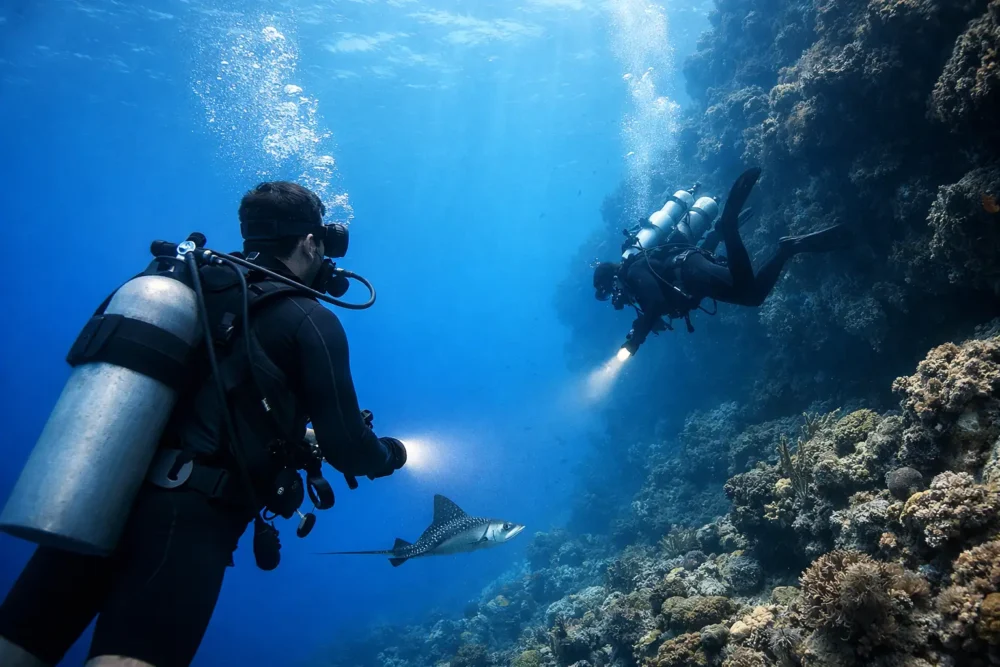
Cozumel is a remarkable place to build those skills. Clear Caribbean water, dramatic wall formations, and boat access to deeper reef profiles create a real-world classroom. This is not about chasing a number on your computer. It is about becoming the diver your buddy can rely on when a dive requires closer attention to gas, time, buoyancy, navigation, and judgment.
What the Deep Diver Specialty Course Teaches
The PADI Deep Diver Specialty course is designed for certified divers who want training for dives beyond the typical 60-foot reef profile, down to a maximum recreational depth of 130 feet. It usually includes four training dives, with an instructor introducing deep-diving procedures in stages rather than treating depth as a one-time challenge.
You will learn how pressure affects planning and performance. At depth, air consumption increases quickly, no-decompression limits become shorter, colors fade, and small buoyancy changes can feel more significant. A dive that looks simple on paper needs a more disciplined approach in the water.
During the course, divers commonly practice setting a depth limit, reviewing emergency procedures, monitoring gas supply, using a descent line or visual reference when appropriate, and making a proper safety stop. You may also compare colors or objects at depth, see the effects of nitrogen narcosis through controlled exercises, and learn why a backup timing device and depth gauge still matter even when you have a modern computer.
The point is not to make deep diving feel intimidating. The point is to replace assumptions with habits. When you know your turn pressure, planned bottom time, ascent strategy, and buddy communication before you descend, the dive feels calmer.
Why Take a Deep Diver Specialty Course in Cozumel?
Cozumel’s reef system offers a beautiful setting for advanced training, but it also asks divers to stay present. Many sites feature sloping coral structures and walls that fall away into blue water. The visibility can be spectacular, which is exactly why divers must avoid letting the scenery pull them deeper than their plan.
Drift conditions are another reason this destination makes practical sense. Current can be gentle, lively, or somewhere in between depending on the site and day. A good deep-dive course in Cozumel teaches you to manage your own position, stay connected with the group, and maintain awareness while the reef moves past. Those skills transfer well to advanced dives anywhere in the world.
There is a trade-off, though. Cozumel is not the place to treat a specialty course as a rush between vacation activities. Deep training deserves rested divers, conservative decision-making, and time to talk through each dive. If weather, current, or a diver’s comfort level calls for a change in the plan, the right call is to adjust. Smart divers never measure a successful course solely by whether they reached the maximum depth.
Who Is Ready for Deep Diver Training?
This course is a strong next step for an Adventure Diver or Advanced Open Water Diver who has enjoyed several dives after certification and wants more confidence on deeper reef excursions. PADI prerequisites generally include being at least 15 years old and holding an Adventure Diver certification or equivalent training. Your instructor will also want to see that your buoyancy, ear equalization, and basic dive skills are dependable.
You do not need to be a fearless diver. In fact, divers who ask thoughtful questions often get the most from the course. If you have felt slightly uneasy watching a wall disappear below you, wondered how guides set their depth limits, or noticed your gas dropping faster on a 90-foot dive, those are good reasons to train.
It may be better to wait if you are newly certified and still using most of your attention on mask clearing, finning, or staying level in the water. A Peak Performance Buoyancy course, a few relaxed guided dives, or a refresher can make deep training much more rewarding. The goal is to add a new layer of challenge without piling it onto unfinished fundamentals.
Deep Does Not Mean Better
Some of Cozumel’s most memorable dives happen well above 100 feet. Turtles, eagle rays, schools of fish, healthy sponges, and bright coral can appear at many depths. Deep Diver training is valuable because it expands your options and sharpens your planning, not because every dive should be deeper.
The best divers know when to remain shallow. They recognize when their gas consumption is higher than usual, when a current has changed the profile, or when a buddy is not comfortable. Choosing a shallower route is not backing out. It is good judgment.
What a Well-Run Course Feels Like
Training quality matters as much as the destination. On a crowded boat, it can be difficult to ask questions, organize equipment, or receive individual feedback before the group enters the water. Small groups give instructors room to watch each student’s trim, descent rate, buoyancy control, and decision-making throughout the dive.
At Blue Magic Scuba, that personal approach fits naturally with fast boats, attentive crew support, and deliberately small groups. You should feel prepared before the descent, not hurried because a large boat needs to keep moving. A professional instructor will explain the plan clearly, invite questions, and make sure you understand why a procedure matters instead of simply asking you to repeat it.
Expect thoughtful briefings. Before each deep training dive, your instructor should cover the site, maximum depth, expected current, entry, route, gas plan, communication, ascent, safety stop, and contingency plan. Afterward, there should be time to discuss what you noticed and what you would change on the next dive.
That debrief is where confidence becomes competence. Maybe you discover that you descend too quickly when the wall begins to drop away. Maybe your trim changes as your cylinder gets lighter. Maybe you realize your turn pressure needs to be more conservative in current. These are useful discoveries when they happen with an instructor at your side.
How to Prepare Before You Arrive
Come to Cozumel well rested and hydrated, with recent diving experience if possible. Review your hand signals, computer settings, and buddy procedures before your first course day. If you own your equipment, bring gear you know and trust, especially your mask, fins, exposure protection, and dive computer. If you rent, ask questions during setup so you understand every piece of equipment before boarding.
Avoid packing your schedule too tightly. Deep training is more enjoyable when you are not trying to squeeze it between a late night, a long mainland excursion, and an early flight. Your instructor may recommend conservative dive planning after the course as well, especially if you are flying soon.
It also helps to arrive with a simple personal goal. Perhaps you want to improve your air management, get comfortable with a deeper wall profile, or prepare for future travel to destinations known for advanced reefs. A clear goal gives your instructor a better way to tailor feedback to you.
The Skill You Bring Home
The deepest value of a deep diver specialty course is not a new card in your logbook. It is a more mature way of thinking about every dive. You begin noticing the relationship between depth, time, gas, current, and your own mental focus before those factors become problems.
That awareness makes future Cozumel wall dives more rewarding, whether you descend to 80 feet or stay much shallower. When the blue opens beneath the reef, you will know that the right response is not impulse. It is a plan, a buddy check, and the confidence to enjoy the view at the depth that makes sense for the day.