Cozumel’s reefs make poor buoyancy obvious in the best possible way. A gentle drift can carry you along a wall of coral, through a narrow swim-through, or past a turtle resting beneath a ledge. In a sidemount diving course Cozumel divers get the chance to refine their trim, streamlining, and awareness in the same warm, blue water that makes a dive vacation worth planning.
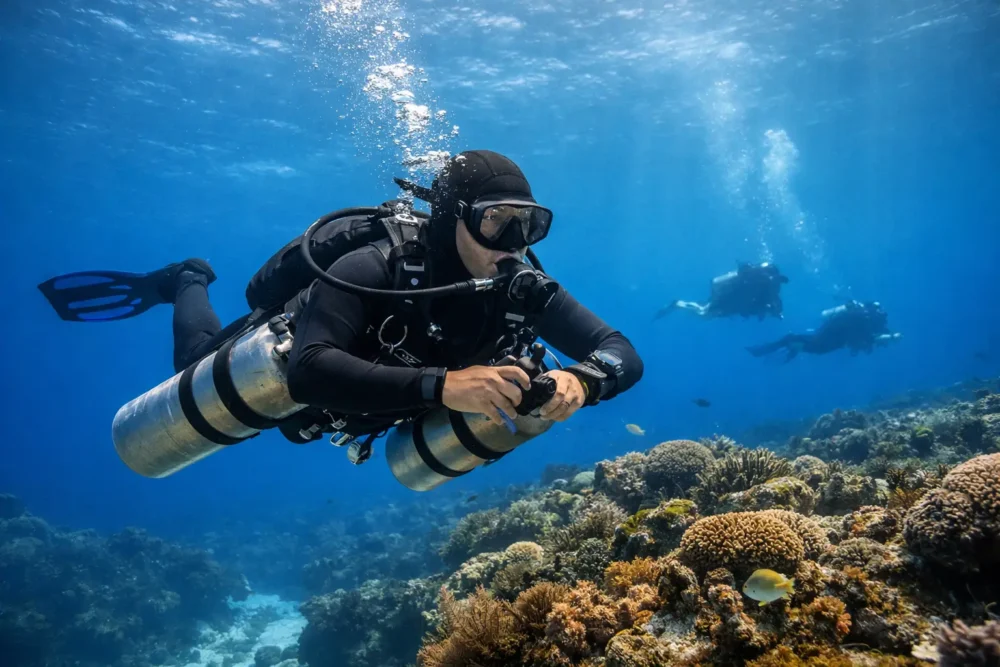
Sidemount is not just a different way to carry cylinders. Done well, it changes how you move through the water. Your tanks sit at your sides instead of on your back, your profile becomes cleaner, and every adjustment becomes more intentional. For divers who want to feel less like they are wearing gear and more like they are flying over the reef, it is one of the most rewarding specialties available.
What a Sidemount Diving Course in Cozumel Changes
Traditional backmount equipment is familiar, practical, and ideal for most recreational diving. Sidemount offers a different set of advantages. With cylinders beside you, rather than behind you, you can often reach your valves, regulators, and attachment points more easily. That accessibility encourages better equipment awareness and gives many divers added confidence during skills practice.
The real goal, however, is not simply to put tanks on your sides. A proper course teaches you to configure the system so it is balanced and comfortable. You will learn cylinder positioning, hose routing, clipping procedures, buoyancy adjustments, gas management, and regulator changes. Small details matter. A cylinder that hangs too low, a bungee that is too loose, or a weight placement that is slightly off can affect trim immediately.
That is why sidemount training should never feel rushed. It takes coaching, repetition, and time in the water to make the configuration work for your body and your diving style. The payoff is a calmer, more streamlined dive profile that can make long reef drifts feel remarkably effortless.
Why Cozumel Is a Smart Place to Learn
Cozumel offers conditions that help divers focus on technique rather than fight the environment. Water is generally warm, visibility is often excellent, and the island’s reef systems provide a beautiful training ground with walls, sand channels, pinnacles, and coral formations at a range of recreational depths.
The current is part of the lesson. Cozumel is famous for drift diving, and that movement teaches a useful sidemount habit: stay stable, stay balanced, and make clean changes without unnecessary motion. When you are hovering near a reef in a controlled drift, sloppy trim and loose equipment become easy to notice. With an experienced instructor nearby, those observations turn into practical corrections.
Of course, conditions vary. Some days bring mild current and calm surface conditions, while others call for more deliberate planning. A good instructor chooses sites and builds the day around student comfort, weather, current, and the skills being practiced. Training should challenge you without making the experience feel overwhelming.
What You Will Practice During the Course
A sidemount specialty is hands-on from the start. Before entering the water, you should expect time spent fitting and adjusting your harness, setting attachment points, and understanding why each part of the system is placed where it is. There is no one-size-fits-all sidemount setup. Your height, body shape, exposure protection, cylinder choice, and weighting all influence the final configuration.
In the water, the focus moves from setup to control. You will practice maintaining horizontal trim, hovering without sculling, managing two independent cylinder supplies, switching regulators, and securing or removing cylinders as needed. You may also work on deploying a delayed surface marker buoy, communicating with a buddy, and responding to common equipment issues.
Expect adjustments between dives. That is a sign of productive training, not a problem. Sidemount is highly personal, and a few changes to bungee length, tank position, or weighting can transform how the system feels. The best courses leave room for that fine-tuning instead of treating equipment configuration as a fixed formula.
Is Sidemount Right for Your Diving?
Sidemount can be an excellent choice for experienced recreational divers who want better trim and a more streamlined profile. It is also appealing for divers interested in future technical, cave, or wreck training, where equipment access and redundancy become increasingly relevant. Yet you do not need technical diving ambitions to enjoy it. Many divers choose sidemount simply because it feels comfortable and makes their reef dives more controlled.
It is not automatically better than backmount for every diver or every trip. Backmount gear is widely available, familiar to most buddies, and often easier to rent in a new destination. Sidemount requires more attention to setup, especially in the beginning. If you prefer to grab a standard rental kit and jump in with minimal adjustment, backmount may remain your everyday choice.
The question is less about which system wins and more about what you want from your diving. If dialing in buoyancy, understanding your equipment, and developing a sleeker underwater position sound satisfying, sidemount deserves serious consideration.
Come Prepared to Get More From the Training
Most students get more from sidemount after they are already comfortable with basic diving skills. You should be able to clear a mask, recover a regulator, maintain reasonable buoyancy, and follow a dive plan without feeling overloaded. A sidemount course is a specialty for building new capability, but it is not meant to replace the foundation of an Open Water course.
Bring curiosity and patience. Your first sidemount dive may feel unfamiliar because your body expects the weight and balance of a back-mounted cylinder. Give yourself permission to learn. The goal is not to look perfect on the first descent. The goal is to understand what your equipment is telling you and make thoughtful adjustments.
If you have a history of back discomfort or struggle with the walk from shore to water while carrying a traditional tank, sidemount may be worth discussing with your instructor. Cylinders can be handled differently on the surface and attached in the water in appropriate conditions. That can be a meaningful comfort benefit, but it depends on the dive site, boat procedures, and your own mobility needs.
Small Groups Make a Real Difference
Sidemount training benefits from personal attention. An instructor needs to see how your tanks hang, whether your hoses are tidy, where your feet sit, and what happens to your trim when you switch regulators or change depth. Those details are difficult to coach from across a crowded boat.
At Blue Magic Scuba, small boat groups and experienced professional instruction create the space for that kind of feedback. Rather than being processed through a high-volume excursion, you can ask questions, make adjustments, and return to the water with a clear purpose. Fast boats also mean more time focused on training and less time spent getting there.
Cozumel’s less-visited reef sites can make the day feel even more special. When the skills are complete, there is nothing quite like settling into a quiet, balanced hover while a reef wall slips by beneath you.
Make Your Course Part of a Better Dive Vacation
A sidemount course does not have to consume your entire vacation. Many divers pair training with guided reef dives, Nitrox, deep or drift specialties, or simply a few relaxed mornings exploring Cozumel’s Caribbean water. Planning your course early in the trip is often helpful because it gives you time to enjoy your new configuration on subsequent fun dives.
Ask about equipment availability before you arrive, especially if you have strong preferences about cylinders, exposure protection, or your existing harness. If you already own sidemount gear, bringing it can be valuable because you will learn on the system you intend to use. If you are trying sidemount for the first time, trained guidance on a properly configured rental system can help you decide what features you actually want before buying equipment.
Choose a course that gives you room to learn, a boat team that treats your comfort seriously, and an instructor who will explain the why behind every adjustment. The reef will provide the motivation. Your next great buoyancy breakthrough may happen on a quiet Cozumel drift, with both cylinders sitting exactly where they should.