
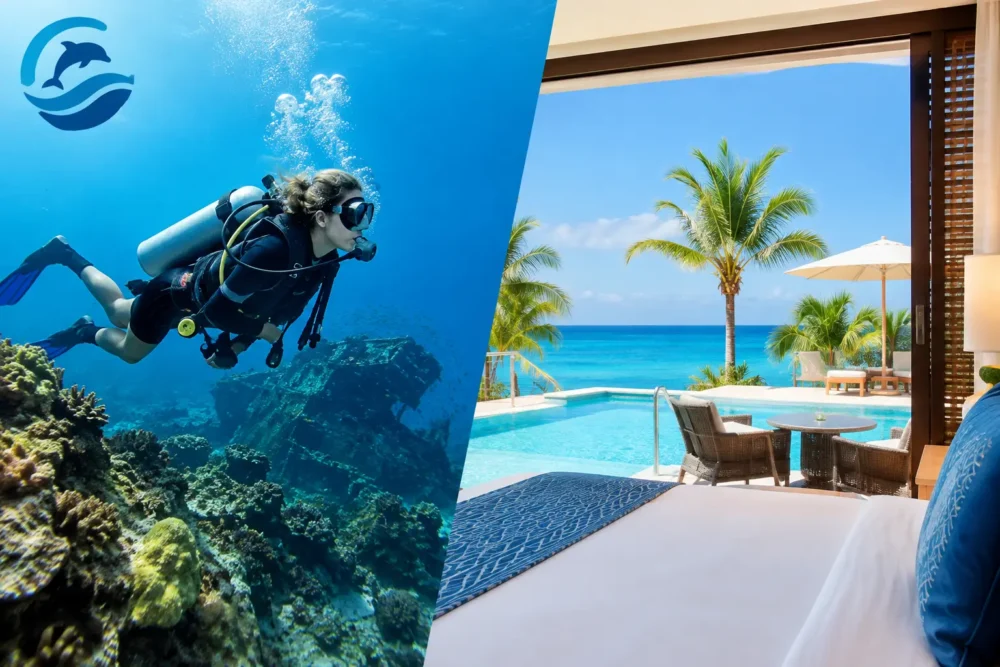
Your room choice can change the rhythm of every dive day. In the dive hostel versus hotel decision, the real question is not simply where you will sleep. It is whether you want your Cozumel trip built around meeting other divers, maximizing your budget, enjoying extra privacy, or making every early boat morning feel effortless.
Cozumel rewards divers who arrive rested and ready. The reefs are the main event, but a great stay shapes everything around them: how easily you get to the marina, whether you can rinse gear and relax, how quickly you find a buddy for dinner, and whether your travel budget has room for another boat dive or specialty course.
Dive Hostel Versus Hotel: Start With Your Travel Style
A dive hostel is usually the better fit for travelers who see the trip as part diving vacation, part community experience. You may share a dorm-style room or choose a private room with common areas nearby. The atmosphere is naturally social. Someone may be comparing a morning drift dive over coffee, another guest may be starting Open Water training, and a new dive buddy can appear before breakfast.
A hotel is usually the better fit when downtime matters as much as time underwater. You may want a private room every night, a dedicated workspace, more room to spread out camera equipment, a pool, room service, or a quieter environment after a full day in the sun. That does not mean hotel guests are less interested in diving. It simply means their ideal recovery routine is more independent.
Neither option is automatically better. A solo traveler on a two-week Divemaster internship has different needs than a couple celebrating an anniversary, and both can have an exceptional Cozumel dive vacation.
The Budget Difference Is About More Than the Nightly Rate
Hostels typically make it easier to keep lodging costs low, especially for solo divers. That savings can go toward Nitrox fills, an extra afternoon dive, equipment rental, restaurant meals, or a course that adds real value to the trip. For students and divers staying longer than a few nights, the numbers can make a serious difference.
The value is not only financial. A dive-oriented hostel can reduce the friction of traveling alone because other guests already understand the early starts, wet gear, sun-faded rash guards, and excitement of a good reef day. Instead of trying to coordinate with strangers at a large resort, you may wake up surrounded by people on a similar schedule.
Hotels can offer value in a different way. If a quiet room helps you sleep well before a demanding course or a week of early boat departures, paying more may be worth it. Couples can also find that a hotel room becomes more cost-effective when the rate is split. Add breakfast, a pool, transportation, or a beachfront location, and the apparent price gap can narrow.
Before booking, compare the full cost rather than the room rate alone. Consider taxes, transportation to the dive shop or marina, breakfast, gear storage, laundry, and whether the stay includes any diving-related benefits. A lower-priced room far from your meeting point can cost more in time and taxi rides than you expected.
Privacy, Sleep, and Recovery Between Dives
Cozumel diving days are wonderfully active. You may be on the boat early, flying along the coast to a less-visited reef, then drifting over coral walls in clear Caribbean water. After two tanks, most divers appreciate a solid shower, lunch, hydration, and a place to recharge.
A hotel gives you the most predictable recovery environment. Private bathrooms, air conditioning, room-darkening curtains, and fewer voices in the hallway can be a major advantage for light sleepers. This is especially useful if you are combining diving with remote work, traveling with a non-diving partner, or taking an intensive professional-level course that requires focus outside the water.
Hostels can be quiet too, particularly a small hostel with a respectful dive crowd, but shared accommodations require flexibility. You may hear someone packing before an early ferry, returning from dinner, or setting an alarm for a sunrise flight. Earplugs and an eye mask are smart additions to any travel kit, but they matter more in a dorm.
If you choose hostel lodging, consider whether a private room is available. It can offer a strong middle ground: lower cost and a built-in dive community, with a door you can close at the end of the day.
Social Energy: A Big Advantage for Solo Divers
For many solo travelers, the best reason to choose a dive hostel is connection. Diving creates fast friendships because everyone has a story from the day. A turtle encounter, a perfect drift, a challenging skill in class, or a favorite reef becomes an easy conversation starter.
That community can be especially valuable for newer divers. Being around other guests who are learning or recently certified can make the first few days feel less intimidating. You can ask practical questions, share meals after class, and head to the boat with familiar faces instead of feeling like you are joining a group of strangers.
Hotels offer social opportunities too, but you may have to create them. A small-group dive operation is often the answer. With six to eight divers rather than a crowded boat, it is much easier to get to know the crew and other guests, whatever accommodation you choose. Blue Magic Scuba pairs that personal boat experience with lodging options for travelers who want a connected, uncomplicated dive-and-stay plan.
Couples and families may prefer the natural privacy of a hotel, but they should not assume a hostel is off limits. A private hostel room can be a lively, budget-friendly base if they enjoy meeting other travelers. The best choice comes down to whether social time feels energizing or like something you need a break from.
Location Can Matter More Than Luxury
Cozumel is easy to enjoy when your lodging works with your itinerary. If you are diving every day, look at the distance to your boat departure point, dive shop, restaurants, and downtown. A beautiful hotel on the far side of the island may be perfect for a beach-focused escape, but it may not be the most practical choice for repeated early starts.
Ask where you will meet the boat, what time check-in begins, and how transportation works. If your dive operation provides equipment support, ask whether you need to carry your own gear back and forth. Valet-style service changes the lodging equation because you can spend less time dealing with wet equipment and more time resting or exploring town.
A centrally located hostel is often ideal for divers who want to walk to coffee, groceries, and dinner after the boat returns. A hotel near the water may be ideal for travelers who want a quiet sunset routine and easy access to resort amenities. Convenience is personal, so map the actual day you expect to have, not just the room photos.
Choose a Hostel If This Sounds Like You
A hostel is likely your best match if you are traveling solo, staying for an extended course, watching your budget, or hoping to meet people who genuinely want to talk about diving. It also works well for divers who would rather spend on time underwater than on a large room they will barely use.
It may be less suitable if you are a very light sleeper, need consistent privacy, travel with a lot of expensive camera gear, or want a romantic, resort-style vacation. Those are not minor preferences. A poor night’s sleep can make a fantastic dive destination feel unnecessarily demanding.
Choose a Hotel If This Sounds Like You
A hotel is likely your best fit if you value privacy, predictable quiet, extra space, and amenities that make your non-diving hours feel special. It is a natural choice for couples, families, travelers mixing work with diving, and divers who need a calm base during intensive training.
The trade-off is usually cost and, sometimes, less spontaneous connection with other divers. You can easily solve the social side by booking with a small, welcoming operation and joining a boat group that is intentionally kept uncrowded.
The best room in Cozumel is the one that helps you wake up excited for the next reef, not the one that looks best in a booking photo. Decide how you want to feel after the boat comes in – social and energized, private and restored, or somewhere in between – then book the stay that gives your dive trip room to be exactly that.