
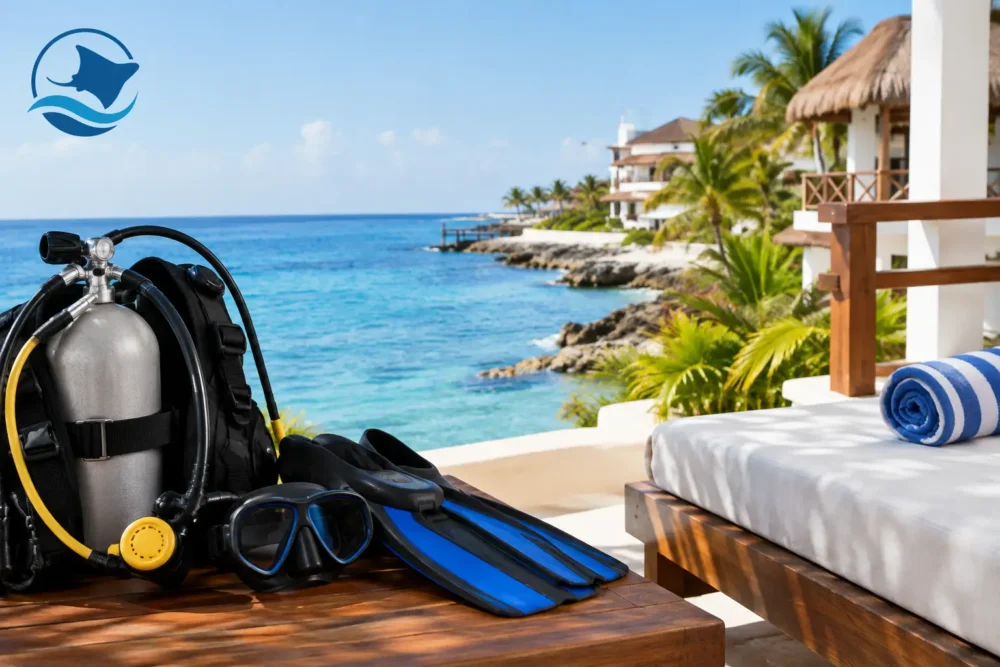
The alarm is set before sunrise, your gear is ready, and the Caribbean is waiting. That is why learning how to choose dive lodging is about far more than finding a clean room and a good nightly rate. On a dive vacation, where you sleep affects how easily you reach the boat, how well you rest between dives, and whether your trip feels relaxed or like a daily logistics project.
In Cozumel, the right place to stay depends on the kind of diver you are. A first-time diver may want a simple, social base with help close at hand. A couple planning four days of reef diving may value quiet, comfort, and a quick walk to restaurants. A Divemaster candidate needs practical space, dependable routines, and a setup that supports long training days. Start with your diving plan, then choose lodging that makes that plan better.
Choose Dive Lodging Around Your Boat Schedule
The first question is not, “What hotel has the nicest pool?” It is, “Where do I need to be before my first dive?” Cozumel mornings are special. The water is calm, the reefs are quiet, and getting out early can mean more time enjoying the island instead of waiting in crowds.
If your operator departs from a marina, staying near the departure point can make a real difference. A five-minute walk or short ride means less stress when you are carrying sunscreen, a camera, certification cards, and the usual pre-dive excitement. It also gives you more time for breakfast and a proper gear check rather than racing through traffic.
That said, the closest lodging is not automatically the best value. Some divers prefer staying farther south for a resort atmosphere or downtown for restaurants, nightlife, and easy access to local life. That can work beautifully if transportation is clear and reliable. Ask your dive shop where boat check-in happens, what time you need to arrive, and whether pickup options are available before you commit to a room.
Match the Room to the Kind of Diving You Are Doing
A dive trip can be wonderfully active. Even two relaxed morning boat dives come with early starts, sun exposure, salty hair, and the happy tiredness that follows time underwater. Your room should help you recover, not add friction to the day.
For recreational divers, prioritize strong air conditioning, a comfortable bed, hot water, and a quiet place to dry out after diving. A balcony or outdoor area is useful, but it is not essential if your operator provides valet-style equipment care. When the crew handles rinsing, loading, and setup, you do not need to turn your hotel room into a gear workshop.
Students should consider convenience even more carefully. Open Water, Advanced Open Water, Rescue, and specialty courses can include classroom sessions, pool work, skills practice, and boat dives. Lodging near your training center reduces the chance that a late breakfast, a missed taxi, or a long return trip interrupts the learning flow. For nervous first-time divers, being close to your instructors and support team also brings welcome peace of mind.
Professional candidates need a different calculation. Divemaster and instructor-level training can mean early starts, long days on the boat, workshops, and real experience in daily dive operations. A basic but well-located room may serve you better than a luxury property across the island. The goal is to protect your energy and keep you connected to the people, gear, and practical experience that move your training forward.
Decide What Convenience Is Worth to You
Cozumel has lodging for nearly every travel style, from hostels and simple apartments to boutique hotels, all-inclusive resorts, and private villas. There is no universal best choice. The best option is the one that supports the vacation you actually want.
A hostel or dive-focused stay can be ideal for solo travelers, students, and divers who want to meet new people. You may trade privacy or resort amenities for a friendlier social atmosphere and a lower overall trip cost. If you are spending most of your day on the water, that trade can be easy to make.
A hotel or condo often suits couples, families, and friends who want their own space. A kitchen can be valuable for early coffee, snacks, and easy lunches between dives. A larger room also gives camera divers more space to organize housings and chargers without turning the bed into a production table.
Resorts bring their own advantages: pools, beach access, restaurants, and a contained vacation feel. They are especially appealing when some members of your group do not dive every day. The trade-off is that resort location and boat schedules do not always line up, and an all-inclusive rate can look less attractive if you plan to spend every morning offshore and every evening exploring town.
Look Beyond the Nightly Rate
A low room rate can become expensive when it creates daily transportation costs, missed meals, inconvenient gear handling, or the need to book separate services one by one. When comparing dive lodging, estimate the full trip cost instead of looking only at the reservation total.
Think about breakfast before an early departure, transportation to the marina, airport transfers, equipment storage, and whether taxes or resort fees are included. If you are traveling with a non-diving partner, factor in what they will enjoy while you are underwater. A slightly higher room rate may be the smarter choice if it places both of you near beaches, restaurants, shopping, or a comfortable pool.
Dive-and-stay packages can simplify this decision because the lodging and diving are designed to work together. Blue Magic Scuba offers flexible sleep-and-dive options, including free lodging nights with qualifying dive and course packages, so travelers can put more of their budget toward what they came to Cozumel to do: get in the water.
Check the Details Divers Notice Too Late
Before booking, make sure the property fits your practical needs, not just the photos. Ask whether the room has reliable Wi-Fi if you need to work or complete online course materials. Confirm the bed setup if you are sharing with a buddy, and ask about quiet hours if rest matters more to you than nightlife.
If you are bringing a camera system, ask about a secure space for electronics, outlets near a table, and whether the property has dependable power. If you are traveling with family, check for elevators, pool depth, kitchen access, and room configurations. If mobility is a concern, ask about stairs, dock access, and the distance from the road to the boat pickup point.
Also consider the personality of the property. Some divers want to trade stories after the boat returns and make plans for dinner with new friends. Others want a peaceful room, a shower, and an early night before another morning on the reef. Neither choice is better. It simply shapes the kind of Cozumel trip you will remember.
How to Choose Dive Lodging Without Overplanning
Start by booking the diving days you care about most, especially if you want small boat groups, specialty training, or a particular course schedule. Then choose lodging that makes those days easy. You do not need every restaurant reservation or afternoon planned before arrival. Cozumel rewards travelers who leave room for a long lunch, a sunset walk, or an extra dive when conditions are too good to pass up.
The right lodging should disappear into the background of a great trip. You wake up rested, reach the boat without stress, return to a place that feels comfortable, and have enough energy to enjoy the island after the gear is put away. Choose that kind of stay, and every reef morning starts a little better.