
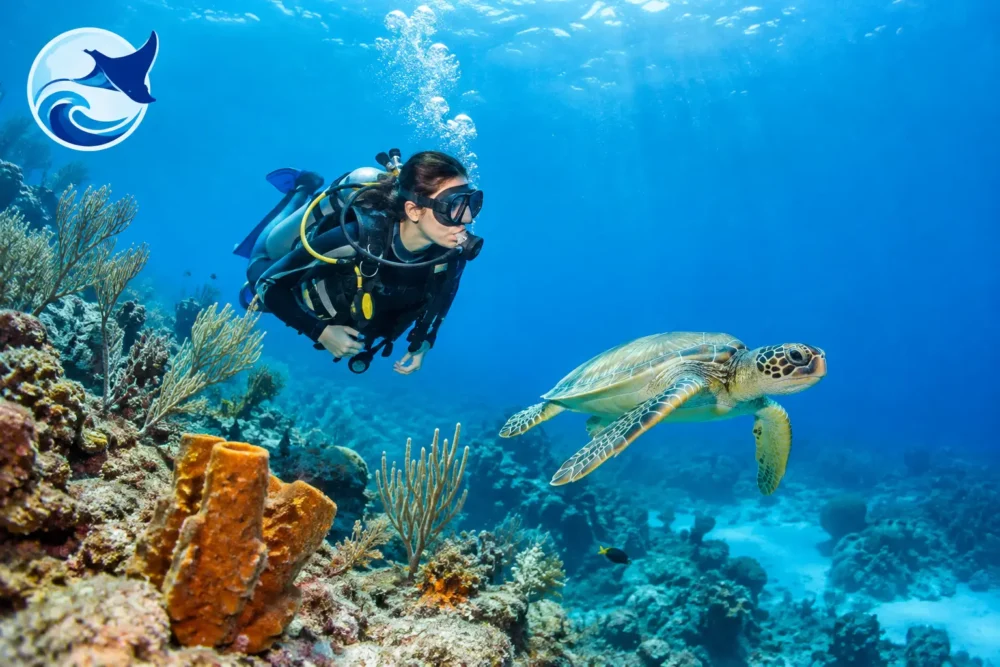
The current is part of what makes Cozumel extraordinary. It carries clear Caribbean water across dramatic walls, busy coral gardens, and long stretches of reef that would take far longer to cover on a still-water dive. This Cozumel currents safety guide explains how to enjoy that movement with the right expectations, skills, and team support – whether you are logging your first ocean dives or arriving with hundreds of dives behind you.
Cozumel is famous for drift diving, but “drift” does not mean being swept along without a plan. Great dives here are intentional: the boat team assesses conditions, divers enter together, the group stays aware of its position, and the captain follows the bubbles for a proper pickup. When everyone understands their role, a moving-water dive can feel remarkably relaxed.
What Cozumel currents actually feel like
Most recreational dives on Cozumel’s west side happen in a generally north-to-south flow. On many days, the current is gentle enough that you barely need to kick. You settle into trim, breathe slowly, look for turtles and eagle rays, and let the reef come to you. That is the classic Cozumel experience.
Conditions change, though. A current may be stronger at the surface than at depth, speed up around a point or channel, or vary from one reef to the next. Wind, tides, weather systems, boat traffic, and localized reef structure all affect the day’s plan. The current can also run in an unexpected direction or ease off entirely.
That is why no responsible operator promises the same conditions every day. The goal is not to “beat” the water. It is to choose an appropriate site, use sound drift-diving practices, and recognize when a diver or a group should take the conservative option.
The safety briefing starts before the boat leaves
A quality Cozumel dive day begins with a clear briefing, not with a rushed giant stride. Your guide should explain the entry method, expected current, maximum depth, planned route, hand signals, buddy expectations, and how the boat pickup works. Listen even if you have dived Cozumel before. Today’s reef, weather, and group are different from your last visit.
Ask questions early if anything is unclear. Nervous about a negative entry? Unsure how much weight you need in salt water? Haven’t used a surface marker buoy recently? Say so. Experienced dive professionals respect divers who communicate honestly far more than divers who nod along and hope it works out underwater.
At Blue Magic Scuba, small boat groups help make those conversations practical. A guide can account for individual experience levels, check that equipment is set up correctly, and avoid treating divers like a number on a crowded excursion. That personal attention matters most when conditions are more active than expected.
Know your entry before you stand up
A common Cozumel entry is designed to get the group below the surface efficiently, where the current may be more manageable. Depending on conditions and the site, your guide may ask for a timely descent rather than lingering at the surface. This is not a race. It is a coordinated entry.
Have your mask defogged, regulator ready, computer on, fins clear, and BC adjusted before the signal. Keep one hand where it belongs on your mask and regulator. Once you are in, orient yourself, make a controlled descent, and meet the guide at the planned depth. If you need help, signal it right away.
Do not add air to your BC just because you feel movement. Current is horizontal water movement; buoyancy is your vertical position. Confusing the two can lead to an uncontrolled ascent or a tiring attempt to stay in one place.
Buoyancy is your best current skill
The safest, most enjoyable drift divers are usually the calmest and most neutrally buoyant. They do not fight to hover over every coral head. They do not grab the reef. They streamline their gear, settle into a horizontal position, and make small adjustments with breath and controlled BC use.
Good buoyancy protects the reef and protects you. In stronger movement, dangling gauges, loose alternate-air hoses, and wide fin kicks create more drag and more opportunities to bump coral. Secure accessories close to your body before the dive. If you are still dialing in your weighting, tell your instructor or guide and plan a careful buoyancy check.
Stay off the bottom, even when the water is moving. Touching coral can damage living animals and may put your hands near fire coral, urchins, or other marine life. If you need to stabilize because of a genuine issue, signal your guide rather than grabbing whatever is nearest.
Do not try to outswim the current
A current can make a modest distance feel surprisingly difficult when you turn into it. If you become separated from the group, do not burn through your gas trying to chase bubbles you can no longer see. Stop, look around, use your signaling device if appropriate, and follow the procedure from the briefing.
In most cases, that means staying with your buddy, ascending safely when required, and deploying an SMB at the appropriate point. Your captain and crew should be prepared to locate and pick up divers at the surface. The exact procedure depends on the site, boat operation, and conditions, so the briefing is the authority for that dive.
The same principle applies if you feel anxious. Get your buddy’s attention and signal the guide early. A calm, controlled ascent with your team is always a better decision than pushing through discomfort until it becomes a problem.
Gas management changes in moving water
Drift diving often feels effortless, but it still requires disciplined gas awareness. Check your pressure regularly, especially after entry, at the deepest part of the dive, and whenever the pace or effort changes. Keep the reserve rule set by your guide, and signal before you reach it.
Air consumption is personal. A smaller diver may use less gas than a larger diver, but stress, poor trim, over-weighting, and hard kicking can change that quickly. If you know you are an enthusiastic breather, tell the guide before the first dive. There is no embarrassment in planning around real consumption. It helps the team choose a comfortable profile and avoids a rushed finish.
Stay near your buddy and within the guide’s visual range. In moving water, a few seconds of distraction can create more distance than you expect. Looking up occasionally is useful, but do not lose track of depth, no-decompression time, or the divers around you while watching the reef pass by.
Surface conditions deserve equal respect
The reef may be calm while the surface is choppy, particularly on windy days. Boat ladders can move, and a current near the boat can make exits more demanding than entries. Follow the crew’s instructions precisely. Keep your mask and regulator in place until you are safely aboard or specifically told otherwise.
When approaching a ladder, wait for the crew’s signal, use the handholds as directed, and avoid placing hands where they can be pinched. Do not crowd another diver on the ladder. If you are tired, say so. A professional crew would rather assist you than have you force an awkward exit.
Seasickness can also affect safety before anyone gets wet. Hydrate, eat a light meal if that works for you, use your preferred motion-sickness prevention in advance, and let the crew know if you are feeling unwell. Fatigue and nausea make small problems feel larger.
When should you sit out a dive?
Skipping a dive is not failing a dive trip. It is a smart choice if you are congested, dehydrated, exhausted, anxious, struggling to equalize, or not comfortable with the stated conditions. The same is true if your equipment is malfunctioning or you cannot remember a key skill. No reef is worth making a bad decision for.
New divers should be especially honest about comfort level. Cozumel can be a wonderful place to learn because the visibility is often excellent and the reefs are spectacular, but certification training needs the right conditions and patient instruction. A Discover Scuba participant or newly certified diver may need a more sheltered plan than an advanced drift diver seeking a faster ride along a wall. Good operators adjust the day when they can and explain the trade-offs when they cannot.
A Cozumel currents safety guide for confident diving
Bring the habits that make any dive safer: check your gear, listen to the plan, stay close to your buddy, monitor gas and depth, and communicate before a concern becomes urgent. Add a willingness to go with the flow rather than fight it, and Cozumel’s currents become a feature instead of a fear.
The best moment to make a smart call is before you enter the water. Tell your crew what you need, take the briefing seriously, and give yourself permission to choose the dive conditions that let you relax enough to notice the reef.