
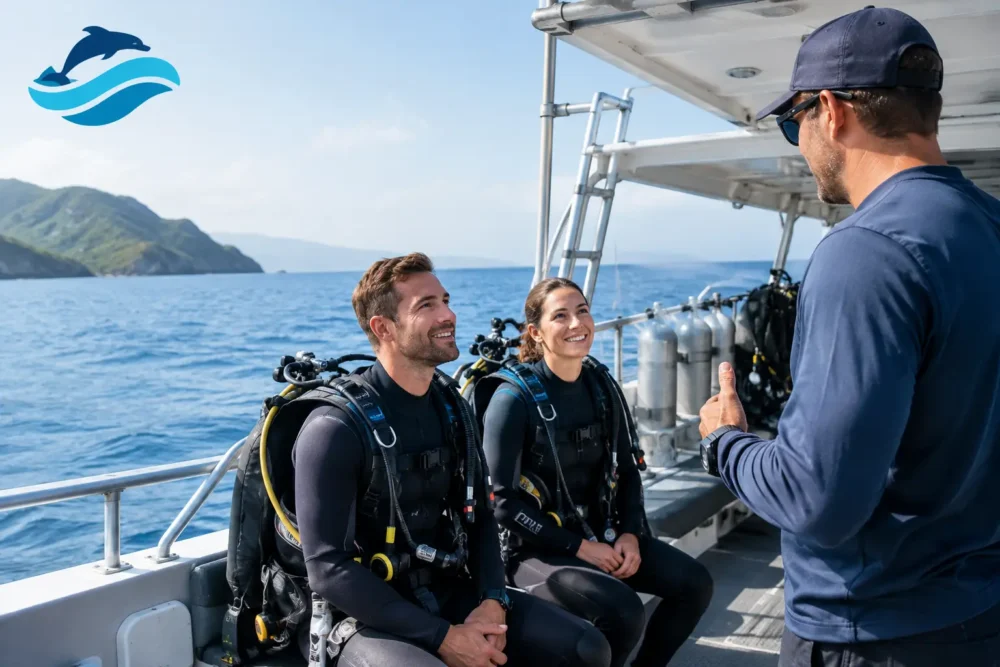
A boat ride to Palancar, Santa Rosa, or a quiet southern Cozumel reef should feel like the beginning of a great dive day, not the most stressful part of it. So, are dive boats safe? Well-run dive boats absolutely can be, but safety is not a logo on the side of a hull or a promise made at booking. It comes down to the boat’s condition, the crew’s judgment, the equipment onboard, and how the operation treats every diver from the dock to the final head count.
For visiting divers, especially those new to boat diving or Caribbean drift diving, knowing what good looks like makes a major difference. You do not need to be a marine mechanic or a rescue diver to ask smart questions. You just need to know the signs of an operation that takes care of its people as seriously as it takes care of their vacation.
Are Dive Boats Safe in Cozumel?
Cozumel is one of the world’s great boat-diving destinations. The island’s western reefs are best reached by boat, and the current that makes Cozumel drift diving so memorable also means divers need a crew that is organized, alert, and experienced with local conditions.
The right answer is not that every boat is equally safe. Boats vary in age, maintenance, capacity, shade, entry setup, and crew procedures. A safe operation recognizes those differences and runs within its limits. It does not overload a boat, rush an entry because another group is waiting, or push ahead when weather or current conditions make the plan unsuitable for the divers onboard.
A quality dive day starts with a properly licensed, maintained vessel and a captain who knows the local waters. It continues with a divemaster or instructor who gives a clear briefing, tracks the group in the water, and communicates with the captain throughout the dive. In Cozumel, where divers may surface well away from the drop point, that captain-divemaster teamwork matters.
What a Safe Dive Boat Should Have
Some safety features should be visible before the boat leaves the dock. Others are revealed in the way the crew prepares and responds. You are looking for both.
A responsible dive boat should carry appropriate emergency equipment, including life jackets, a first-aid kit, oxygen for diving emergencies, communication equipment, and signaling devices. The exact setup can differ by vessel and local regulations, but the crew should know where equipment is stored and be ready to explain their emergency procedures without hesitation.
The boat itself should also feel orderly. Dive gear should be secured rather than rolling under benches. Walkways should be reasonably clear. A sturdy ladder with a reliable handhold matters more than people realize after a dive, when fins, waves, and a little fatigue are all working against your balance. Shade and drinking water are not merely comfort extras in the Caribbean either. Avoiding overheating and dehydration helps divers make better decisions throughout the day.
Just as important, the crew should make a real effort to know who is on the boat. That means checking certifications when needed, asking about experience, confirming medical or dive-relevant concerns, and paying attention to the least experienced person in the group. A boat can carry excellent gear and still feel unsafe if everyone is treated as an anonymous wetsuit.
The Briefing Tells You a Lot
Listen closely before the first entry. A useful boat briefing is specific to that day, that site, and that group. It should cover how to enter and exit the water, the current and expected conditions, the planned depth and route, lost-buddy procedures, surface protocol, and where to find safety equipment.
For drift dives, a strong briefing should explain the pickup process clearly. Divers generally descend together, stay with their buddy and guide, surface as a group when the dive is over, and use a surface marker buoy when appropriate. The boat follows the dive team rather than remaining anchored in one place. That process is normal in Cozumel, but it only works well when everyone understands it.
Be cautious if a briefing is so rushed that you leave with unanswered questions. You should never feel embarrassed for asking where oxygen is kept, how the crew handles separation, or what happens if conditions change. Professionals welcome those questions. They would rather clarify the plan at the dock than solve a preventable problem in the water.
Small Groups Are a Meaningful Safety Advantage
Small-group diving is not only a nicer vacation experience. It can be a real safety advantage, particularly on a drift dive or for guests who have not dived recently.
When one divemaster is responsible for a manageable number of divers, it is easier to see whether everyone is comfortable, monitor air consumption, adjust the pace, and keep the group together. It is also easier to match divers by experience. A newly certified diver may enjoy a gentle reef and a little extra attention, while an experienced diver may be ready for a deeper profile or a more energetic current, provided conditions allow it.
Large boats are not automatically unsafe, and some are run exceptionally well. Still, large groups can create practical challenges: crowded entries, longer waits at the ladder, more divers to track, and a more standardized pace. If personal attention matters to you, ask the operation about its typical group size, not just the total number of passengers the boat can hold.
At Blue Magic Scuba, deliberately small groups of six to eight divers allow the crew to keep the experience personal, uncrowded, and closely supervised without taking the adventure out of Cozumel’s best reefs.
Weather Calls Are a Sign of Professionalism
The safest boat day is sometimes the one that gets delayed, changes sites, or is canceled. That can be disappointing when you have traveled a long way and planned your vacation around a particular dive, but it is also exactly what you want from a responsible operator.
Wind, waves, visibility, current, thunderstorms, and harbor conditions can all affect the day’s plan. A good crew checks the forecast but also reads the actual conditions at the dock and on the water. Forecasts help, yet local judgment decides whether a particular boat, route, and group of divers are a good match that morning.
Do not mistake a flexible plan for poor organization. Choosing a more sheltered reef, moving to a shallower profile, or calling a dive early can be evidence of excellent judgment. The ocean does not care about a printed itinerary, and neither should a safety-minded crew.
Your Role in Boat-Dive Safety
A professional crew carries major responsibility, but safe diving is still a shared effort. Pack your certification card if required, be honest about your experience level, and say something if you are nervous, cold, tired, or unsure about a skill. A good divemaster can help only with information they have.
Before entering the water, check your own equipment and your buddy’s essentials: air supply, weights, releases, mask, fins, computer, and surface signaling device. Confirm the plan for the dive, including your maximum depth and minimum gas pressure for ending the dive. If you are returning after a long break, consider a refresher or an easier first dive instead of trying to prove you still have it.
On the boat, move deliberately. Keep your gear area tidy, hold handrails when the boat is moving, and wait for crew direction before giant-striding in. After surfacing, inflate your BCD, establish buoyancy, stay with your buddy, and make yourself visible to the boat. These are basic habits, but they prevent the kinds of small problems that can become stressful when wind and current are involved.
Questions Worth Asking Before You Book
You do not need an interrogation. A few direct questions can tell you whether an operation’s standards match your expectations. Ask about typical group size, whether oxygen and first-aid equipment are onboard, how the crew handles drift-diving pickups, what experience is recommended for planned sites, and how weather-related changes are decided.
Pay attention to the quality of the answer. Clear, patient answers are reassuring. Vague claims that everything is “always fine” are less useful than a crew that can explain its process. The best operators do not sell fear. They show you how they prepare, then give you the space to enjoy the reefs.
A safe dive boat should let you focus on the right things: the eagle ray gliding over the sand, the sponge-covered wall falling away beside you, and the easy rhythm of a well-planned day on the water. Choose a crew that earns your confidence, speak up about what you need, and the boat ride can become part of the adventure you remember for all the right reasons.