
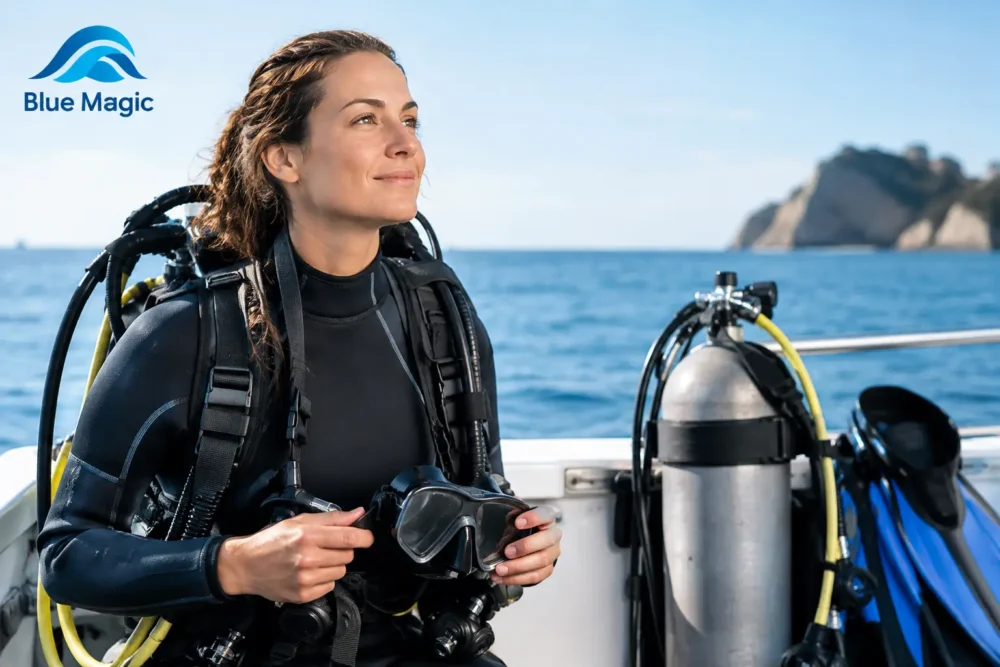
That old certification card in the back of your wallet may be more useful than you think. Does scuba certification expire? For most recreational divers, the short answer is no: your entry-level certification does not carry an expiration date. But if your last dive was years ago, the better question is whether you are ready to enjoy the ocean safely and comfortably.
A certification proves that you completed the required training at a certain point in time. It is not a promise that every skill will remain fresh forever. Diving is wonderfully forgiving when you stay current, but buoyancy control, mask clearing, regulator recovery, descent procedures, and emergency responses can feel unfamiliar after a long break. A little practice can turn pre-dive nerves into the relaxed, weightless fun you remember.
Does Scuba Certification Expire for Recreational Divers?
PADI recreational certifications, including Open Water Diver, Advanced Open Water Diver, Rescue Diver, and most specialty certifications, do not expire. Once earned, the certification remains valid. The same general principle applies to many major recreational training agencies.
That said, a valid card does not automatically mean every dive is appropriate. A dive operator has a responsibility to assess conditions, follow local rules, and make sound safety decisions. If you have not been underwater for a while, a professional may recommend a refresher before placing you in stronger current, deeper water, or a more demanding environment.
This is not a penalty and it is not a sales tactic. It is good diving judgment. A diver who has been away from the water for six months may feel perfectly at home after a quick review. Someone returning after five or ten years will usually have a much better first day after rebuilding fundamentals in calm, shallow water.
Your certification level matters, too. An Open Water certification remains an Open Water certification. Time away does not erase it, but it also does not add experience or qualify you for dives beyond your training. If you want to make deeper dives, use enriched air, or become more confident in current, the right specialty course can be a far better choice than simply pushing ahead.
When Should You Take a Scuba Refresher?
There is no universal expiration clock, but a refresher is a smart move when your comfort and recent experience suggest it. Many dive professionals use roughly a year without diving as a useful point to start the conversation. The right answer depends on your total number of dives, where you learned, the conditions you are returning to, and how honestly you feel about your skills.
A refresher is especially worthwhile if you have not dived in more than a year, have fewer than 20 to 30 lifetime dives, feel anxious about setting up equipment, or cannot clearly remember the steps for handling common problems underwater. It also makes sense if your previous experience was limited to easy vacation dives and you are now planning drift diving or deeper reef profiles.
For Cozumel, current is part of the magic. It carries divers gently along dramatic walls, coral gardens, sponges, turtles, and schools of fish without the need to kick constantly. It can also expose rusty buoyancy habits quickly. Being able to hold your depth, stay close to your buddy, manage your position, and make a calm safety stop is what lets you enjoy a beautiful drift instead of working through it.
A quality refresher should be hands-on, not just a quick verbal quiz on the boat. Expect a review of dive planning and equipment assembly, followed by practical skill practice in a pool or calm confined water. You may review mask clearing, regulator recovery, alternate air source use, neutral buoyancy, and safe ascents. The goal is not to test or embarrass you. It is to restore the habits that make every dive feel easier.
What Dive Shops May Ask Before You Dive
Even though your certification itself does not expire, dive shops typically need to confirm a few details before taking you out. You should be ready to show proof of certification, complete required liability paperwork, and provide an honest recent-dive history. A logbook or digital record is helpful, though it is not always required for standard recreational dives.
You may also be asked about medical conditions, medications, recent surgery, pregnancy, asthma history, heart concerns, or any change that could affect diving. Be straightforward. Some answers may require a physician’s clearance before you get in the water. That process protects you, your buddy, and the crew, and it is far better handled before vacation day one.
Conditions matter as much as dates. A diver with 100 logged dives who has been dry for two years may need a refresher. A diver with 12 recent easy dives may be ready for a relaxed reef trip but not a challenging deep or current-intensive profile. Good operators look beyond the card and help match the day to the diver.
At Blue Magic Scuba, small boat groups make that personal assessment practical. Rather than treating every certified guest the same, the team can talk through your experience, help with equipment setup, and recommend the best route back if you are returning after time away. That extra attention is one reason a small-group Cozumel dive day feels so different from being rushed through a crowded boat schedule.
Certification, Currency, and Professional Status Are Different
The phrase “certification expires” causes confusion because recreational certification is only one part of the picture. Currency refers to how recently and regularly you have practiced. Your card may be valid for life, while your skills need a tune-up.
Professional credentials work differently. Divemasters, instructors, and other dive professionals usually must maintain active teaching status through their training organization, renew membership, carry appropriate insurance where required, and keep current in emergency care and other professional standards. An instructor who allows active status to lapse cannot simply teach the next day because they still possess an old instructor card.
Emergency First Response, CPR, first aid, oxygen provider, and similar certifications often have expiration periods, commonly around two years. These courses are designed around skills that should be refreshed regularly, particularly because standards and recommended techniques can change. If you are pursuing Rescue Diver, Divemaster, or Instructor training, keeping those prerequisites current is part of the path.
How to Return to Diving With Confidence
Start by locating your certification information before you travel. If you have lost a physical card, your training agency may be able to help retrieve your certification record. Do not wait until the morning of a boat trip if you can avoid it.
Next, be realistic about your experience. Tell the shop when and where you last dived, how many dives you have completed, and what feels rusty. The best crew response is not judgment. It is a plan: perhaps a refresher first, perhaps an easy initial dive, perhaps extra guidance with weighting and equipment. Honest communication gives the professionals around you the information they need to support you.
Give yourself time. Arrive early, avoid turning your first dive back into a race, and listen closely to the briefing. If you are renting gear, take a few minutes to check fit and function. A properly fitting mask, comfortable fins, and sensible weighting solve more problems than divers expect.
Finally, let the first dive be a return, not a performance. Descend slowly, breathe steadily, and focus on simple fundamentals. Check your buoyancy. Look after your buddy. Notice the color of the reef and the rhythm of your breathing. The confidence comes back faster when you leave room for it.
Your scuba certification can stay with you for life. Your comfort underwater deserves a little more ongoing care. If it has been a while, choose the refresher, ask every question, and make your next descent one you can enjoy from the first breath.